


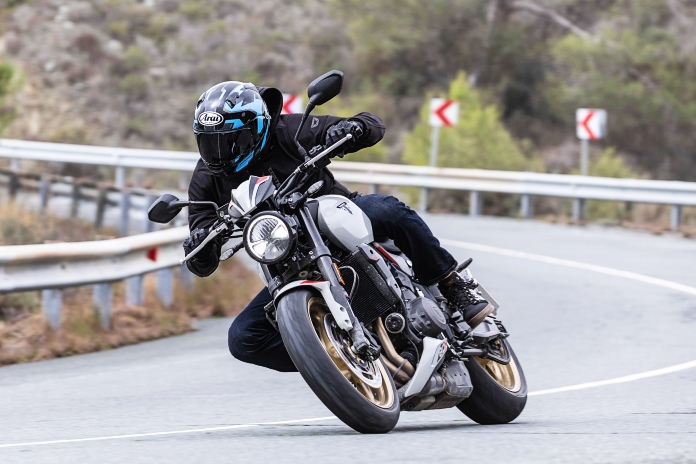
Like the Bonneville, Rocket 3, Tiger, and other models, the modern-day Triumph Trident 800 carries forward a name from the British bike maker’s past. The first Triumph Trident (also badged and sold as a BSA Rocket 3), powered by an air-cooled 740cc OHV Triple that made 58 hp, was produced from 1968-1975.
After Triumph Engineering Co. Ltd. went belly up and the marque was revived by John Bloor as Triumph Motorcycles Ltd., the Trident name was resurrected in the ’90s for 750cc and 900cc naked bikes.
The Trident name went dormant again until the 2021 model year, when Triumph launched the Trident 660 roadster. The then-$7,995 bike was Triumph’s most affordable model until the $4,995 Speed 400 joined the lineup for 2024.
Product planners look for holes in their lineups to identify unmet needs. In Triumph’s roadster lineup, there was a big jump in power and price from the Trident 660 (which was updated for 2026 and now makes 94 hp and is priced at $8,995; read our review) to the track-ready Street Triple 765 RS (128 hp, $13,545).
Enter the 2026 Triumph Trident 800. With a 798cc, 113-hp Triple borrowed from the Tiger Sport 800, which tester Kevin Duke dubbed the “practical hooligan” when he tested the 2025 model, a lightweight, dynamic chassis, and a full suite of electronic rider aids, it delivers serious bang for 9,995 bucks.
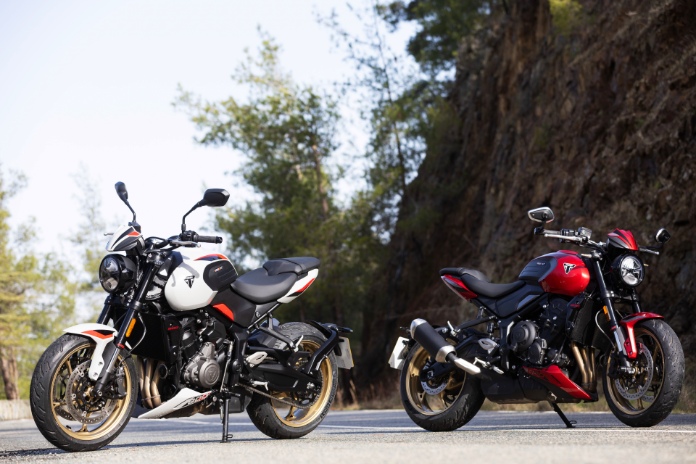
At the press briefing, held in a warehouse in Limassol on the Mediterranean island of Cyprus, Triumph reps touted the Trident 800’s “dynamic urban attitude.” And to underscore their point, they showed a video of stunt rider and racer Ernie Vigil ripping wheelies and burnouts on the grounds of the building where we sat.
Speaking of attitude, the Trident 800 reminds me of the original Speed Triple, which had a single round headlight for a few model years and a raucous 885cc inline-Triple that made 108 hp. The Trident has a similar headlight, now illuminated by LED, and its 798cc inline-Triple pumps out 113 hp.
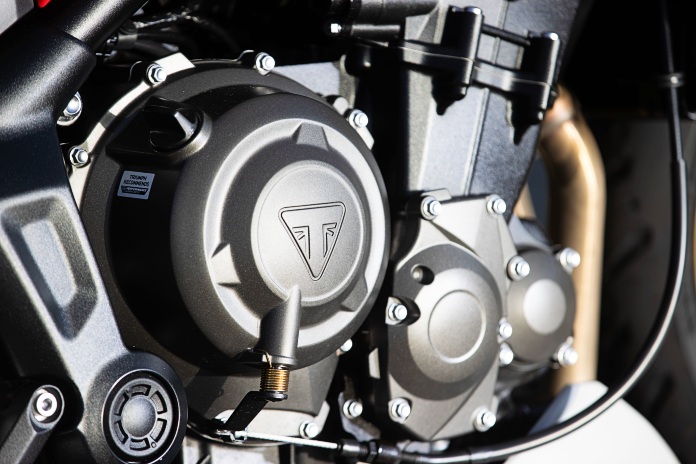
The Speed Triple was one of the first production streetfighters, a category that spoke to its raw character and tendency to bring out a rider’s inner hooligan. The Trident 800, on the other hand, is more refined, though I wouldn’t go so far as to call it tame. These days we benefit from electronics that make light, powerful bikes easier to live with. The Trident 800 is equipped with cornering ABS, cornering traction control, ride modes, an up/down quickshifter, and even cruise control.
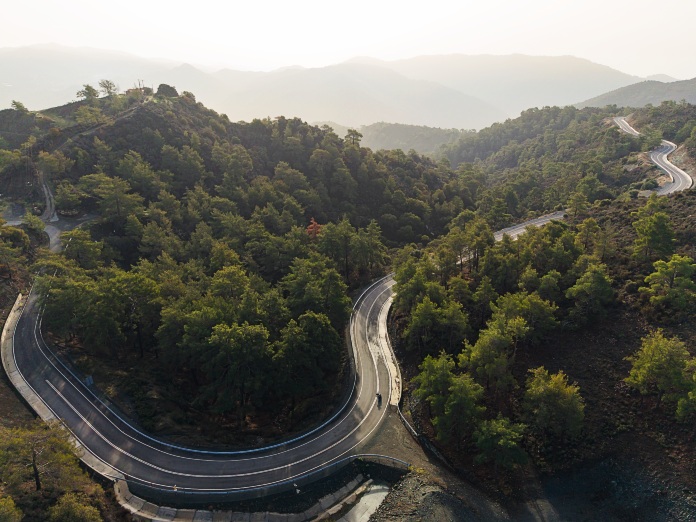
Despite some people calling them electronic “nannies,” these rider aids don’t make a bike dull or boring. They operate in the shadows, ready to come into the light only when you need them. And they certainly came in handy when ascending a cold, wet, winding road toward Cyprus’ mountainous interior. The Michelin Road 6 tires provided confident grip, but you never know when an off-camber curve or an unexpected dip will turn a thrilling ride into a pulse-raising pucker moment. Usually I didn’t even feel it, but a brief flash of the TC light let me know the Trident always had my back.
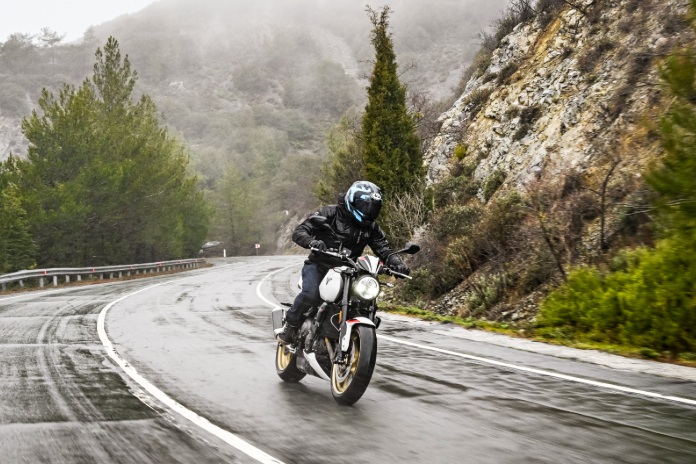
The first half of our test ride was in conditions you’d rather not travel halfway around the world for: intermittent rain, the road surface a minefield of mud and puddles, and thick patches of gray, depressing fog. When we stopped at a mountain pass, howling wind and pouring rain came and went. And they came on strong when it was my turn for tracking photos and video while riding two feet from a car’s bumper. Afterwards I stood in a tent so close to a propane heater that steam rose from my soaked jacket and gloves.
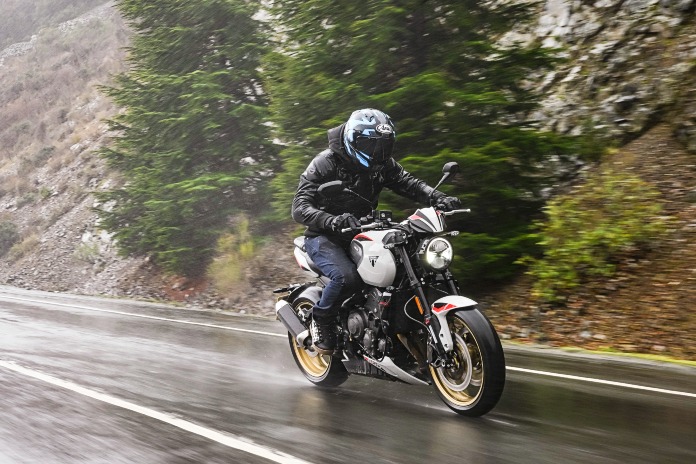
GEAR UP
- Helmet: Arai Signet-X
- Jacket: Cortech Meta Hoodie
- Airbag Vest: Alpinestars Tech-Air 5 Plasma
- Gloves: Cortech Sport Lite
- Pants: Cortech AA Dyneema Jeans
- Boots: Cortech Slayer Checkered Shoes
Riding in such conditions, while not ideal, provides an opportunity to evaluate a bike’s versatility. Is it skittish or reassuring? Easy to handle or a handful? It should come as no surprise that a motorcycle designed and tested in the U.K. comports itself as well in the rain as the Trident 800 did. The tiny flyscreen atop the headlight provided no appreciable protection from the elements, but the bike’s upright, comfortable seating position and its overall user-friendliness meant that the rain and wind were merely an inconvenience, something to talk about over beers after the ride rather than something to be feared in the moment.
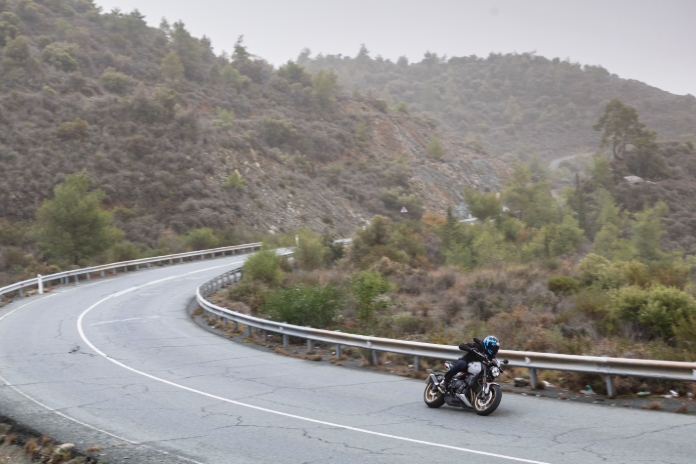
After sorta drying out and kinda warming up during lunch, we rolled out on still-wet streets, but the rain had finally let up. By the time we crossed the mountain pass to the southern side of Cyprus, the clouds broke apart, the sun pushed its way through, and the road became mostly dry. Game on!
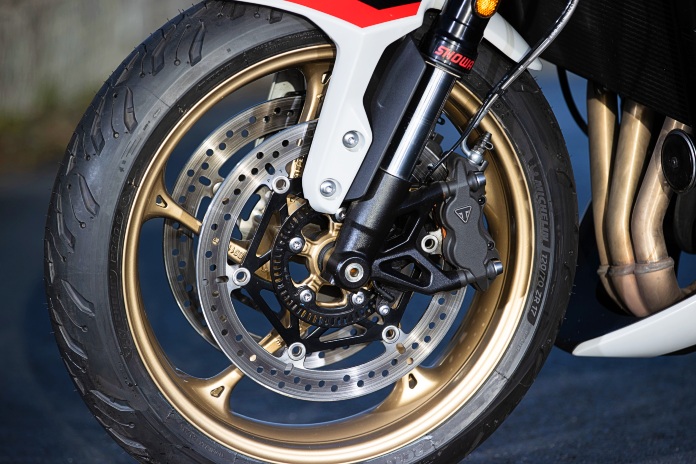
Finally able to work the throttle harder, the Trident’s Triple woke from its Rain mode slumber and its Sport mode personality shone through. As we worked our way down a long, winding descent toward the coast, the 800 became lively and instantly responsive, and its 61.9 lb-ft of peak torque arrived at 8,500 rpm, right in the heart of the midrange. The bike pulled hard out of every corner as the rear shock compressed, the 180/55-R17 Michelin dug into the tarmac, and a soul-stirring growl emanated from the exhaust pipe.
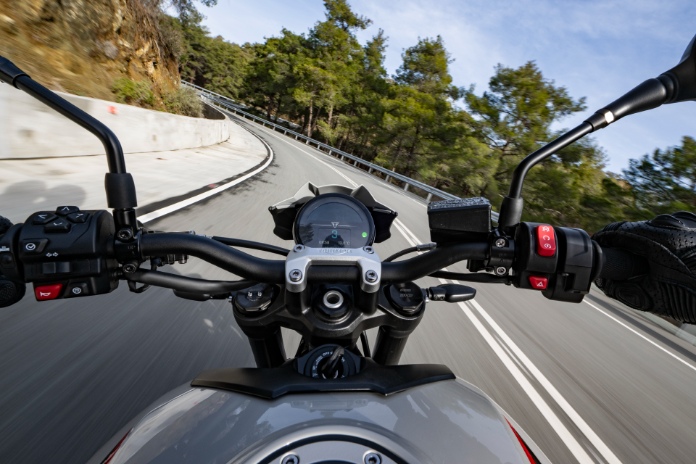
Ahead of me were Ryan Adams from Motorcycle.com, Rennie Scaysbrook from Cycle News, and a few other fast guys, and I pushed hard to keep pace. At 437 lb, the Trident is light and agile, and its Showa suspension neutralized most pavement imperfections to keep the chassis relatively stable. Stopping power from the twin 4-piston radial front calipers was good, though initial bite and feel at the lever left room for improvement.
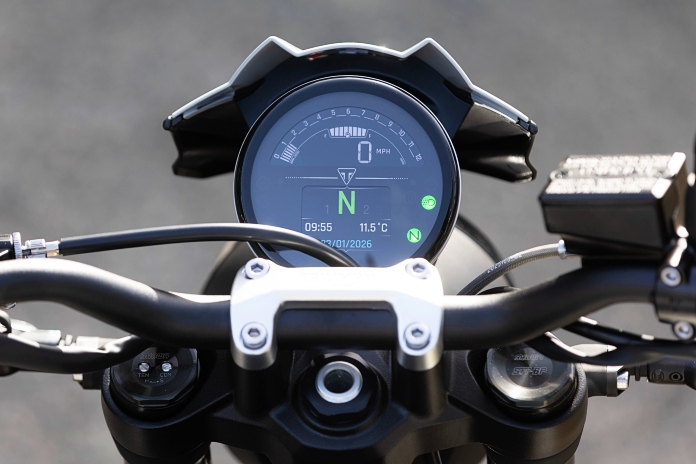
The more we rode, the more confident (and dry) I became. The Trident’s tubular-steel frame, shared with the Tiger Sport 800 and adapted for roadster duty, felt rock solid. Shifting around on the seat and pegs and pushing left and right on the tubular handlebar, the ergonomics never became a pain point or something I had to work around. And during straight stretches or when cruising through the city, the mostly upright seating position made perfect sense. This is an all-around bike, one that’s just as happy to carry its owner to work every day as it is to be a playful weekend companion or a sport-tourer (just add Triumph’s accessory tankbag and tailbag).
Triumph launched more than 30 new and updated motorcycles for 2026, and the Trident 800 would be easy to overlook among all the stylish Bonnevilles, halo bikes like the Speed Triple 1200 RX, or budget-friendly 400s. It’s a lineup filler, a bike squeezed in between existing models, one that isn’t the cheapest or the best in its category. But that would do a disservice to such a fantastic motorcycle. We need dependable workhorses, versatile all-arounders, and affordable go-getters. We need bikes like the Triumph Trident 800, and we’re better for them.
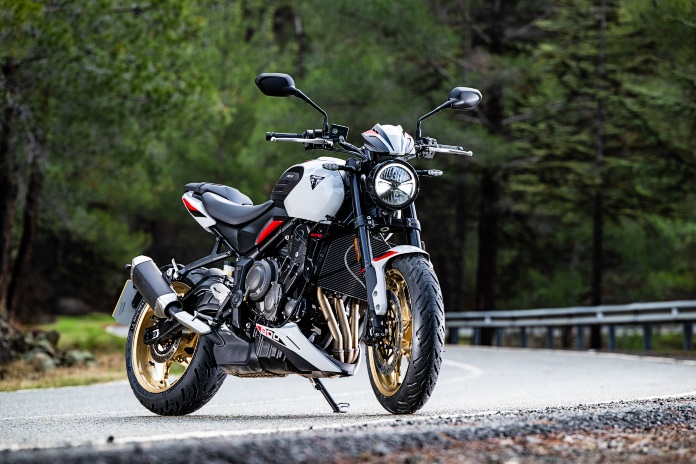
2026 Triumph Trident 800 Specs
- Base Price: $9,995
- Website: TriumphMotorcycle.com
- Warranty: 2 yrs., unltd. miles
- Engine Type: Liquid‑cooled, transverse inline-Triple, DOHC w/ 4 valves per cyl.
- Displacement: 798cc
- Bore x Stroke: 78.0 x 55.7mm
- Horsepower: 113 @ 10,750 rpm (factory claim)
- Torque: 61.9 lb-ft @ 8,500 rpm (factory claim)
- Transmission: 6-speed, cable‑actuated wet slip/assist clutch w/ quickshifter
- Final Drive: Chain
- Wheelbase: 55.2 in.
- Rake/Trail: 24.5 degrees/4.3 in.
- Seat Height: 31.9 in.
- Wet Weight: 436.5 lb
- Fuel Capacity: 3.7 gal.

















2026 Triumph Trident 800 Specs
Engine Type: Liquid‑cooled, transverse parallel‑Twin, DOHC w/ 4 valves per cyl.
Displacement: 798cc
Should it be a transverse triple?
Copy and paste fail! Thanks for pointing out our mistake. We’ve updated the spec chart.
I keep thinking I’ve aged out of motorcycling, but bikes like this tug at me. The styling is retro enough to appeal to me, the ergonomics sound right for my aging body, and the power curve in the mid-range sounds right. Only my retirement fixed income hold me back….
A year or 2 will bring some affordable used ones – maybe sooner as some buyers will decide it is not for them. Also consider a used Trident 660. Cheap and 94 hp is plenty – i have ridden them.
12,000 mile service is $1500, Street Triple experience
Obscene….total gouge.
Rodgere,
What maintenance entails the 12,000 mile service? That is useful for owners who don’t know how to or can’t do their own maintenance. However that same cost will occur with most any bike these days if an owner doesn’t invest the time themselves.
I don’t mind paying a few (or even five) hundred dollars for a service I can’t or won’t perform myself, but $1500 is EXCESSIVE. A friend just payed $670 for his new Moto Guzzi’s first service….an oil and filter change and checking to make sure everything works. Ridiculous.