


The Mecum Monterey Auction is right around the corner, taking place Aug. 13-15 during Monterey Car Week. Amidst the many collectable cars that’ll be up for auction, a slew of rare and unique motorcycles can also be found crossing the block this weekend.
We’ve already covered a few of the noteworthy motorcycles scheduled for the Monterey Auction, including a couple ultra-rare Ducatis, bikes in the Ruote da Sogno SRL Collection, and some other Italian motorcycles from the John Goldman collection. In addition to these, motorcycle enthusiasts will enjoy seeing a few special Harley-Davidsons this weekend as well. Here’s a look at three of our favorites.
The full lot list, with detailed photos and descriptions, can be found on Mecum’s website, where viewers can also register to bid in person or remotely.
1915 Harley-Davidson J Model
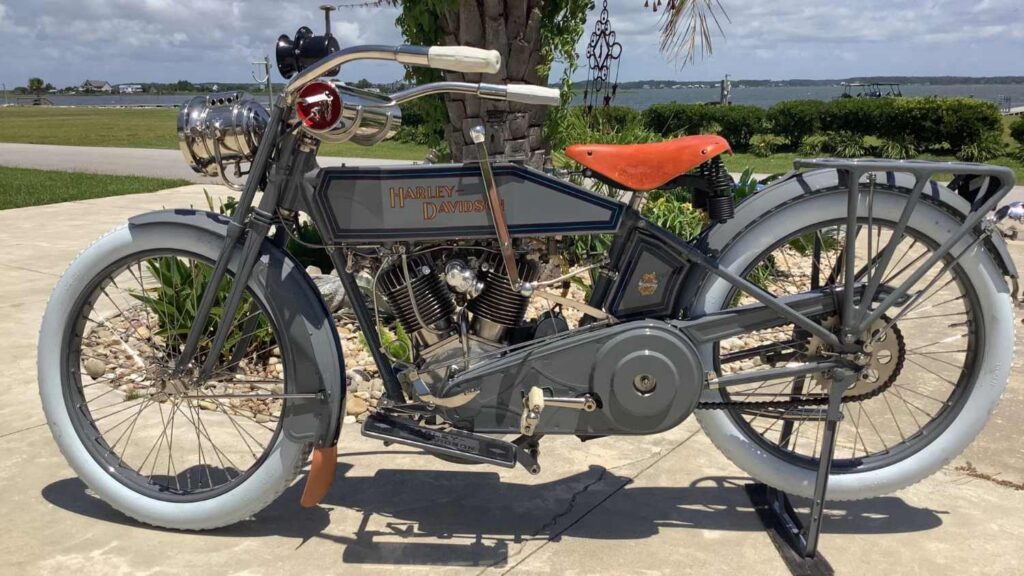
The 1915 Harley-Davidson J Model was introduced as Harley’s flagship motorcycle, combining a 61ci (1,000cc) F-head V-Twin with a 3-speed gearbox and features like a step starter and an electrical system for lights and a horn.
The example offered here is an early-production J Model that has undergone restoration and comes from the collection of a longtime AMCA member. Particularly notable is its one-year-only frame, along with matching engine-case belly numbers. Other period details include rocker oilers, a Payne carburetor air horn, coffin-style fuel tanks, and fork. Period-appropriate accessories include a Presto-Lite acetylene headlamp, Old Sol tail light, and original Stewart horn. The machine has not been started since its restoration to preserve its nickel plating.
1942 Harley-Davidson WLD Sport Solo
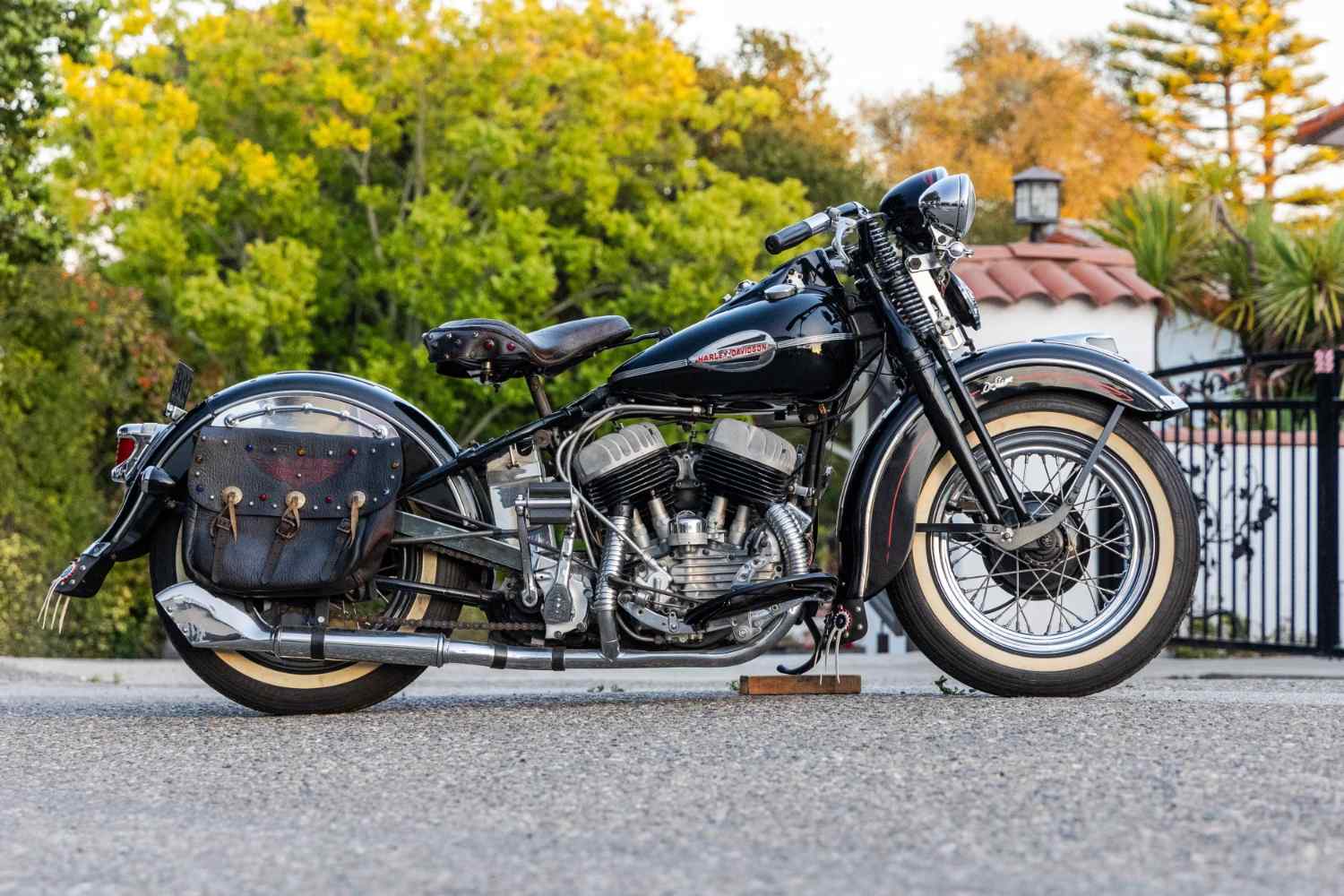
This WLD represents one of the final versions of Harley-Davidson’s 45ci flathead V-Twin before wartime production shifted heavily toward military motorcycles during WWII. Introduced as the sportier version of the W-series lineup, the WLD featured a higher-compression engine and a lighter, shorter chassis than Harley’s larger models.
The example offered by Mecum features a Linkert carburetor and a 3-speed transmission converted to foot shift. It also has a black fuel tank with red pinstriping and matching fenders, leather-decorated fender extensions, and a Springer fork. It’s equipped with original pre-war rhino-grain black leather saddlebags decorated with jewels and other details coordinated with the seat.
The 1942 model year marked the final year of WLD production. With Harley’s efforts already shifting to military machines, the WLD only had a 33-unit production run in 1942, making this an extremely rare example of the model.
1942 Harley-Davidson WLA with Sidecar
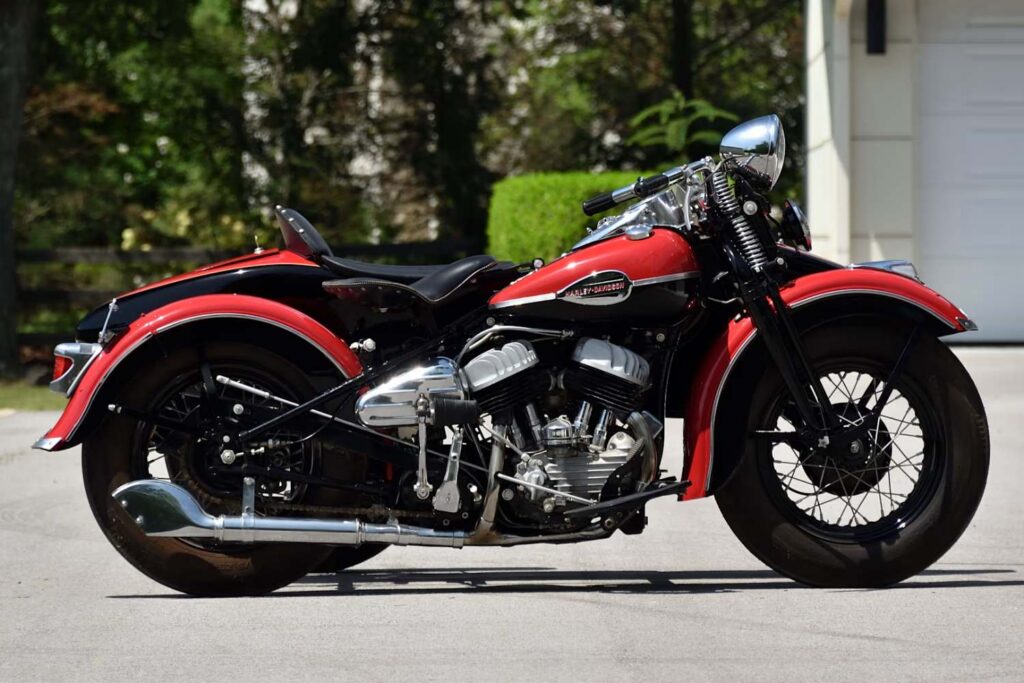
As the WLD’s story described above was coming to a close, the WLA was being born. Developed for military service during WWII, this motorcycle became one of the most recognizable American military motorcycles. It was based on the civilian WL, adopting the 45ci flathead and 3-speed transmission of the civilian series but transformed into a rugged machine that could handle the roughest conditions.
Looking at this photo, you might not see a war-going machine here. This example has been comprehensively restored, including the two-toned paint job, bright chrome, and stainless trim. It once sat on the floors of the Barber Motorsports Museum in Birmingham, Alabama, and it has remained in climate-controlled private showrooms since its restoration. Notable details here include a leading-link Spring fork and “Ful-Floeting” sprung seat post, as well as its matching sidecar.
Don’t Miss Mecum Monterey
Whether you have a particular model in mind or you just want to enjoy a variety of cool bikes, Mecum Monterey during Monterey Car Week is a not-to-be-missed event on the moto calendar. Those who register to bid can bid in person at the event or remotely by phone or online. Registering grants the bidder a year’s membership, meaning they’ll be able to register for future auctions throughout the year without needing to pay the registration fee again. Visit the Mecum website for more information.






And what about that outrageous Softail sidecar rig that’s on air ride. The badest custom sidecar rig ever built and painted by renowned custom painter Art Himsl?
Guess not cool enough
Is it going to on the T V ?