
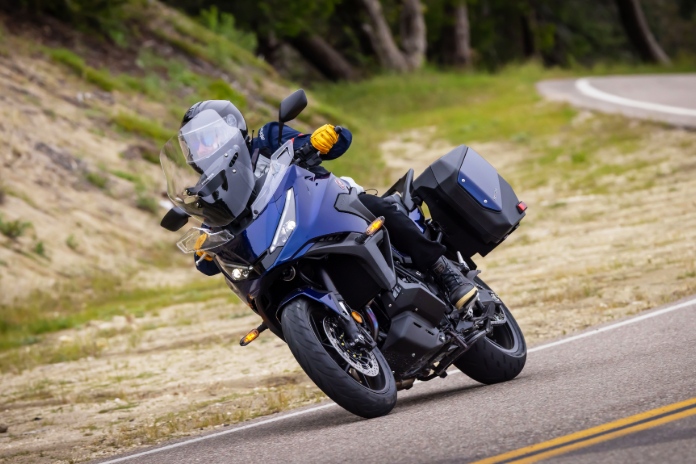
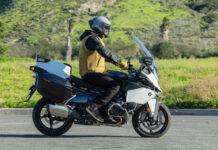
If I asked you to get my BMW R 1300 RT-P out of my garage, you could do it with your eyes closed; hop on, pull in the clutch, roll the bike back and forth as you confirm it’s in 1st gear, find neutral with the delicacy of a safe cracker, and start rolling it back with careful solid presses of your legs. And if you were on a slight incline, you would probably employ the front brake preload trick as you backed out, which I won’t explain because it would come to you intuitively.
But recently, I’ve been exposed to something that takes a major component of my training and motorcycling experience and blows it sideways, and we need to discuss it: automatic clutch systems. I’m confident you know about the biggies – Honda’s Dual Clutch Transmission, BMW’s Automated Shift Assistant, and KTM’s Automated Manual Transmission – and maybe you’ve been curious. Well today I’d like to give you my practical hands-on seat-of-the-pants situational optics on the subject in case you are on the fence about buying a motorcycle equipped with one of these systems. Just understand that if you want a dive deep into the technological origins and mechanical innerworkings of automatic clutch systems, I’m not your guy.
And to clarify, this is not a head-to-head shootout between automatic clutches but rather an exploration of their unique characteristics when compared to a traditional manual clutch during a glorious Southern California ride day. Okay, let’s hit it.
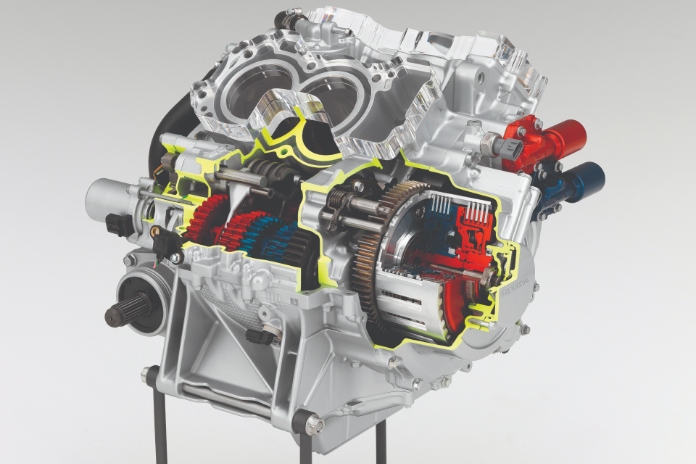
The first obvious observation is the lack of a clutch lever, and with it, the elimination of the need to use one when shifting gears. Instead, you have various buttons, selectors, and modes to get things rolling. So after a few quirky sequences are initiated, you can successfully get in gear and head down the road without the need to lift a finger (or your left toe).
And hey, I’ll admit it’s kind of nice. What happens if you roll up to a traffic light and realize your airbag vest is offline and requires all hands on deck? If you are like me, you will reflexively start jabbing at zippers and tabs to get it online again, ignoring the fact that you never downshifted and were still in gear when your hands left the handlebar. But not to worry because our automatic-clutch motorcycle will idle calmly, watching us make fools of ourselves. As soon as the light phases green, we can twist the wrist and get up to speed without ever having to touch a clutch or shift lever – similar to riding a twist-and-go scooter. An automatic clutch is especially nice when you merge and pass vehicles on the freeway, because it requires almost no physical or mental effort to accomplish your desired tasks. That means if you are primarily a commuter, one of these systems is a no-brainer.
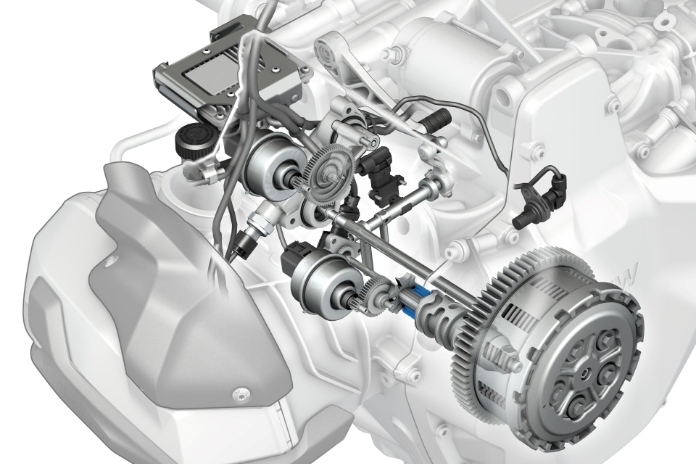
But when you hop off the freeway and cruise through the city, automatic clutches can reveal awkward characteristics. For example, with BMW’s ASA, I found myself mid-turn from a traffic light in 2nd gear, when it unceremoniously decided to short-shift to 3rd and then into 4th, causing me to lose drive, upset the bike, and hastily intervene by manually dropping back into 2nd gear using my left foot on the toe shifter. I typically didn’t experience issues like this with the Honda because it had a Sport mode setting which held revs longer in each gear. But this had its own drawbacks, because it made the engine mapping and gear selection overly abrupt when cruising around, causing the ride to be a little frenetic and too, well, sporty. The KTM system had a somewhat different trait; because the clutch didn’t engage until approximately 1,900 rpm (higher than either of the other two systems), it was smooth when taking off but required more initial throttle action than the others to move power to the driveline and get moving. Deal breakers? No. But different for sure.
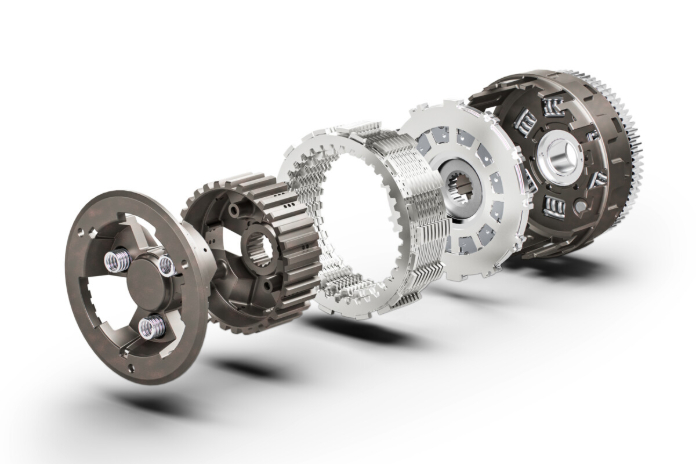
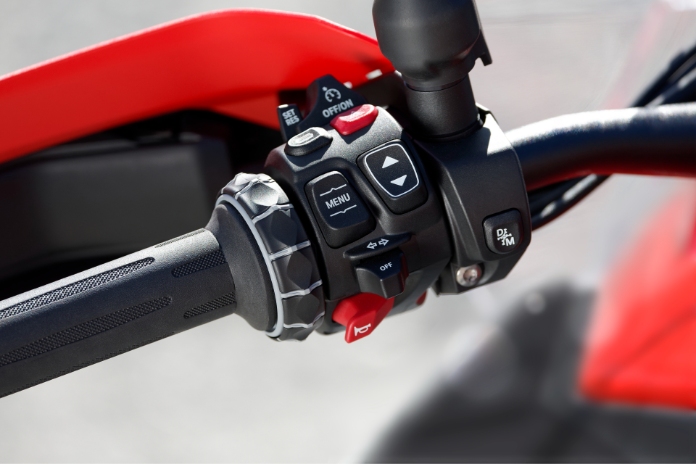
If you want to throw on some Yacht Rock and cruise down the coast, none of these automatic systems will cause any issues for you, assuming you maintain smooth and consistent throttle inputs. But if you want some canyon-riding therapy and begin fluctuating your throttle position rapidly, the automatic systems can be quirky. First off, they tend to select gears and shift points you never would have chosen for yourself. I don’t care what system we are discussing or what mode they are in; no automatic system will magically select and hold gears precisely and consistently where you want them. Do they access complicated vehicle parameters to get you close? Sure, but we all know that saying about horseshoes and hand grenades. Luckily, all of these automatic systems have manual modes, which work much like a sports car with paddle shifters. You physically select the gear you want, and the transmission rapidly shifts without requiring manual actuation of the clutch.
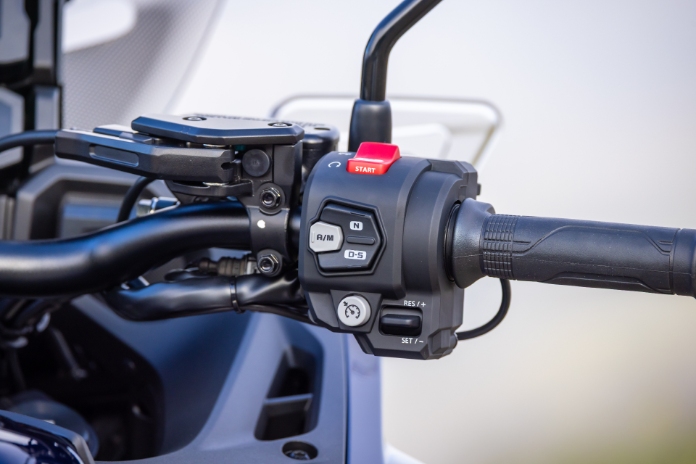
Once in manual mode, operating the motorcycle will feel more natural, because it gives back most of the control lost when the clutch lever goes away. If you want to pull away smoothly from a traffic light, instant paddle shifts can be fired off with virtually no effort, and you can short-shift up to speed. If you want to blast a canyon and stay in the meat of the powerband, manual mode offers effortless upshifts and downshifts that are rapid, seamless, and consistent.
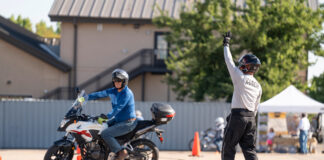
Should you decide to work on your slow-skills riding program, automatic clutch systems are generally not the best tools for the job. For example, Honda’s DCT tends to send power almost immediately to the driveline when you apply throttle, which results in instantaneous forward momentum. This makes slow control problematic because we need power, not speed, and Honda’s DCT gives you both. The only real option here (and the one I teach) is to load down the rear brake while simultaneously increasing rpm to around 1,500-1,800. Critically, you can only push the bike in this manner for a few minutes, otherwise the entire system will get overly taxed and hot.
BMW’s ASA and KTM’s AMT, however, function more like a traditional clutch by transferring power to the driveline well above idle (around 1,500 rpm and 1,900 rpm, respectively) before generating forward motion. That means I’m able to comfortably perform slow maneuvers without taxing the drivetrain. Is it easier than a traditional clutch? No, but if you wanted to try your hand at slow skills, the BMW ASA and KTM AMT systems could do it.
Maybe one of the quirkiest aspects of using automatic clutches relates to the stopping and parking process. We don’t realize it, but because our motorcycles have manual clutches, they can be stopped and parked in any gear and take off in any gear. All we need to do is actuate the clutch. But with automatic clutches, we don’t have direct access to the clutch, so the motorcycle must have safeguards to prevent it from rolling away or taking off when we fire it up. Honda solved this by mounting a physical parking brake lever on the handlebar. BMW has a more complex system that will automatically go into Park when you stop and transition into Neutral upon startup. If you have a KTM with AMT and decide you don’t want it to roll away, you need to access one of the paddle shifters and click down until you select Park.
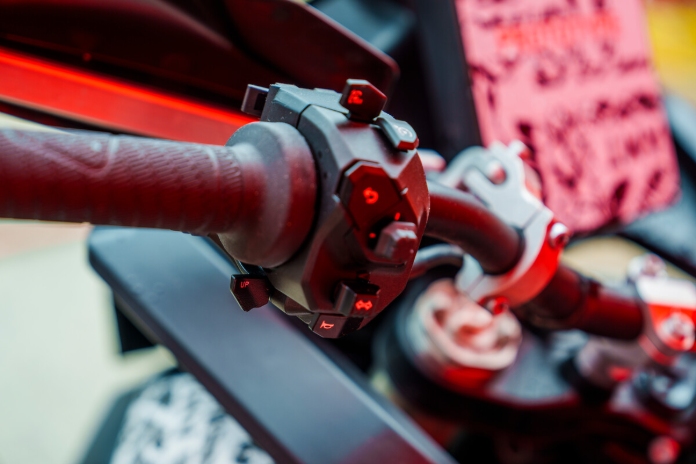
All automatic clutch systems require some type of ritual (usually the application of both brakes) to get them to start and go into gear. And while it’s odd at first, so was cleaning your air filter or adjusting your chain. There’s a learning curve. Despite all that, I think automatic clutches are a fantastic option for many riders.
Quinn wears Schuberth helmets, Richa apparel, Lee Parks Design gloves, and Indie Ridge boots. Find out more at Quinn’s website, PoliceMotorTraining.com. Send feedback to rider@ridermagazine.com.


Great insight. I’ll stick to my fully manual motorcycles, but this was cool.
Thanks Scott- yeah im not sure if I’m TOO old and want a clutch because I grew up with one, or I’m not old enough yet and do t fully appreciate the creature comforts auto systems afford…Time will tell!
I recently participated in a Honda Demo Days ride on a DCT-equipped Honda Gold Wing. I was dubious just how controllable the big, heavy Wing would be without a clutch lever, but I was pleasantly surprised. I didn’t attempt much low-speed parking lot maneuvering, just when parking after the ride, but my usual rear brake skills seemed adequate with steady throttle operation. I did, however, use the manual downshift paddle (even in Auto mode) on some approaches to intersections where I wanted a little more load on the drivetrain.
Despite my positive impression, I’m not running out to add a DCT Wing to my garage, because it’s still a $30K motorcycle.
Hey Quinn, any thoughts about Honda’s e-clutch?
It seems to offer the best of both worlds – the ease of auto shifting, along with the fine control of a manual clutch when desired.
I’m surprised Honda doesn’t offer it on more models.
Love your articles and YouTube training videos, BTW.
Hey Mark-
I have not had a chance to test out Honda’s E clutch system that you mentioned. I have had an opportunity to utilize systems like this from aftermarket providers like Rekluse And I loved it. Just like you mentioned it’s the best of both worlds.
I would absolutely invite this type of clutch offering if it was an option in a bike I was looking at👍 Thanks for the comment!
I tried a GW, DCT in 18 when it came out. Didnt like it at all. Tried BMW with no clutch, didn’t care for it either. It always shifts to early and puts it into a gear that is to high. I won’t get the NT1100 because they don’t offer it in a clutch model.