


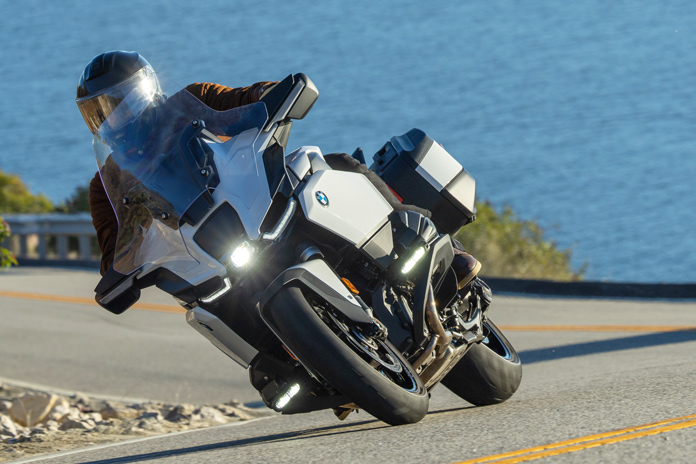
Not to toot my own horn, but as BMW’s National Brand Ambassador for its authority division, I have so many years of enforcement, training, and competition experience exclusively with BMW’s RT platforms that I could close my eyes and listen to the engine alone and tell you what generation you just fired up. And that includes BMW’s new R 1300 RT, which I’ve been training and competing on since riding a pre-production version of it in June 2025 in Germany.
Okay, maybe now I am tooting my own horn.
So today, I’m going to take some of that training and experience and apply it to the new 2026 BMW R 1300 RT with the optional ASA (Automated Shift Assist) and give you my honest feedback.
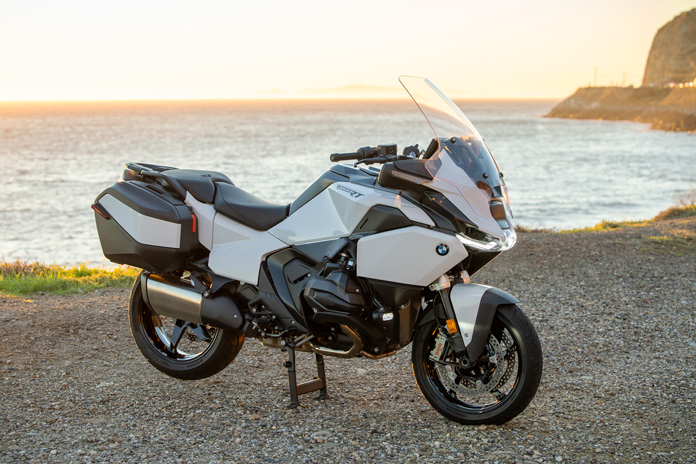
First, I’d like to address the curiosities surrounding the new ASA option this bike has, because it’s probably the biggest news out of Berlin and most of you likely haven’t tried it yet. The ASA automates the clutch and shifting process by clicking through its conventional 6-speed transmission. Similar to Honda’s Dual Clutch Transmission, you don’t have a clutch lever, don’t need to physically shift gears, can’t stall the bike, and gain the challenge of wondering what to do with your left hand for the first 25 miles. Having spent a fair amount of time with both systems (see my test of Honda’s new NT1100 DCT), I can say there is a considerable difference between the two of them. Let me explain.
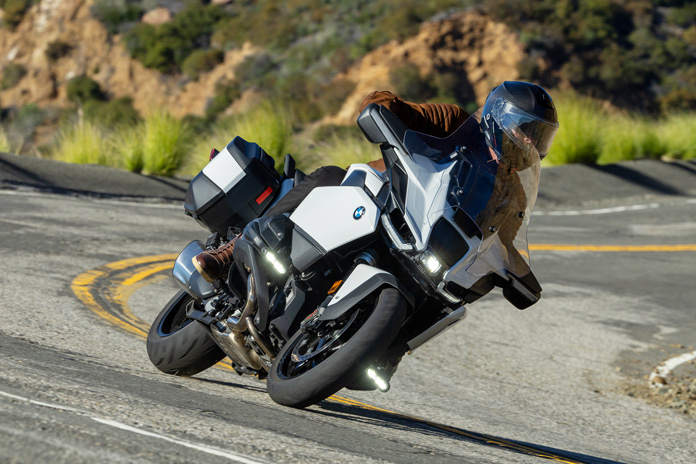
BMW’s ASA engages the driveline almost exactly like a conventional clutch does, meaning you still have the sensation that clutch plates are being used (slipping) to control power to the driveline as revs fluctuate. This is evident when you take off from a light, ride exceedingly slow in a parking lot, or execute tight maneuvers like U-turns; it’s smooth and gradual, but most importantly familiar. That means I can generate some revs without immediate and direct forward momentum, enabling smooth control of the motorcycle in tight conditions without needing to ride the rear brake excessively to keep speeds down.
In contrast, the DCT system from Honda uses two clutches (one for even gears and another for odd gears), so the system lacks that clutch slipping capability and instead generates an immediate power pulse to the driveline when you crack the throttle. This makes slow control much more challenging, because any engine speed above idle generates immediate forward momentum, modulated only by heavy rear brake and heavy throttle, which quickly heats up the system. In short, BMW’s ASA system is hands-down better when the speeds drop.
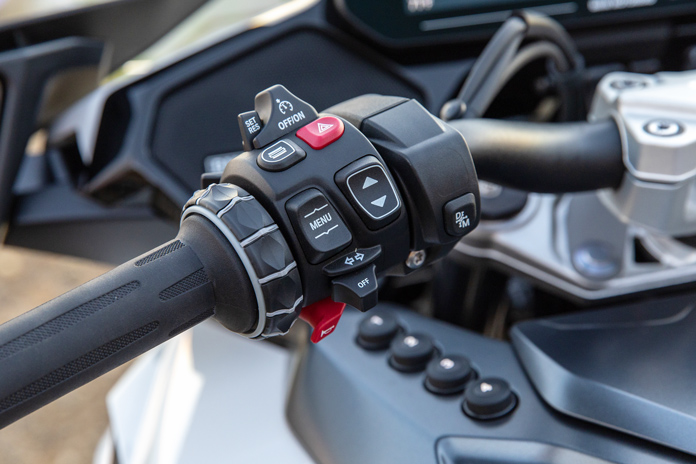
Diving a bit deeper, the ASA has two modes: Manual (M) and Drive (D). If you choose Manual (my favorite by a long shot), simply employ your left foot in the same way you currently do and click down into 1st gear. The automatic clutch will smoothly engage the driveline and away you will go. Want to shift? Just click up into 2nd and beyond. The shifts are quick, smooth, and effortless. And while this might not sound much more convenient than a traditional clutch system, try a few hours of city riding, topped off with a dollop of stop-and-go traffic. It’s a game changer.
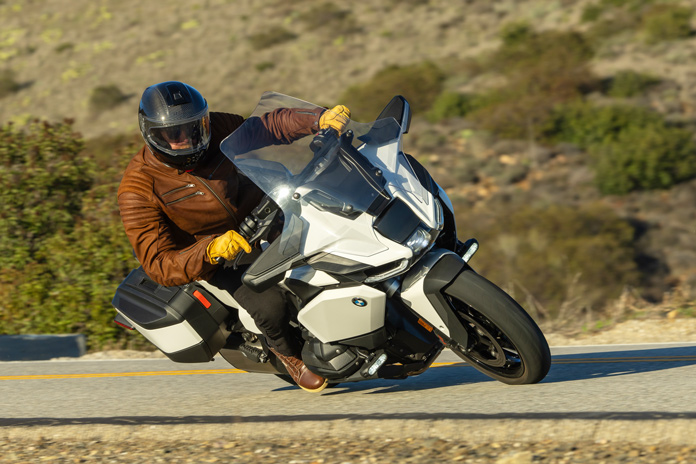
Where the ASA was not fantastic was when I used it in Drive mode and dealt with city riding. The transmission kept short shifting at slower speeds, which might not sound like a big deal, but when I took off from a dead stop and went directly into a turning movement, sometimes the motorcycle surprised me by suddenly cutting power and shifting gears. This caused it to increase lean angle when I least expected it, resulting in a momentary sense of freefalling. Essentially, the shift points were nowhere near where my natural inclination expected them, like suddenly shifting to 3rd while mid-corner at 15 mph. That said, it wasn’t an issue while cruising at freeway speeds or in long sweeping canyons.
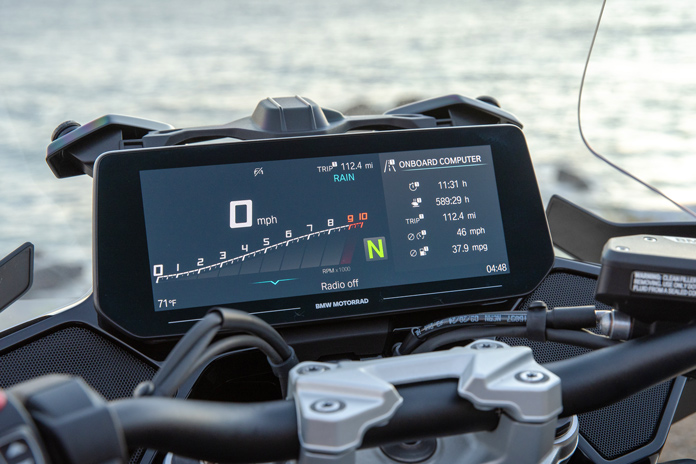
But in those situations, it revealed another irritation I had with ASA’s Drive mode. No matter how much throttle I gave it, or how rapid I twisted the throttle while cruising down the road, often it wouldn’t downshift to get me moving. Yes, simply dropping gears with my left foot was a quick fix, but if I’m going to have to do that, I might as well just keep it in Manual mode, which is what I ended up doing for most of this test.
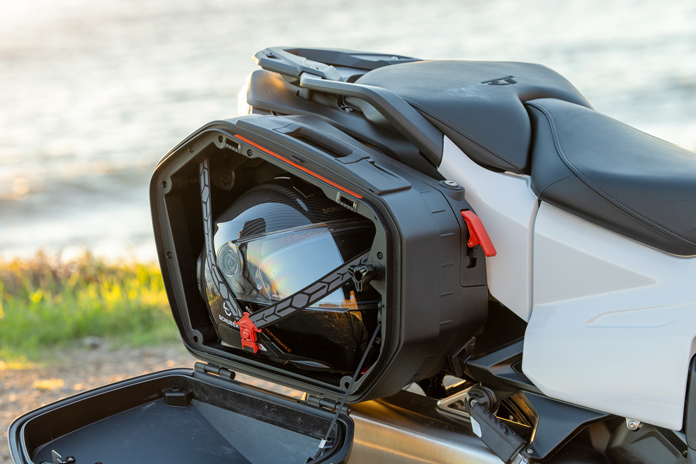
So to land the plane on ASA, it’s fantastic in Manual mode in all situations, the automated clutch is great for slow speed situations (something most automatic systems struggle with), but it’s only tolerable in fully automatic Drive mode. Also, putting the ASA-equipped RT into neutral was tricky. Which clutchless system do I prefer? I like ASA better than DCT because while I could live just fine with it in Manual mode on the street, I do loads of slow skills riding and the DCT is not a good option for that. Otherwise, I think the DCT works better everywhere else if you’re looking for a true automatic option.
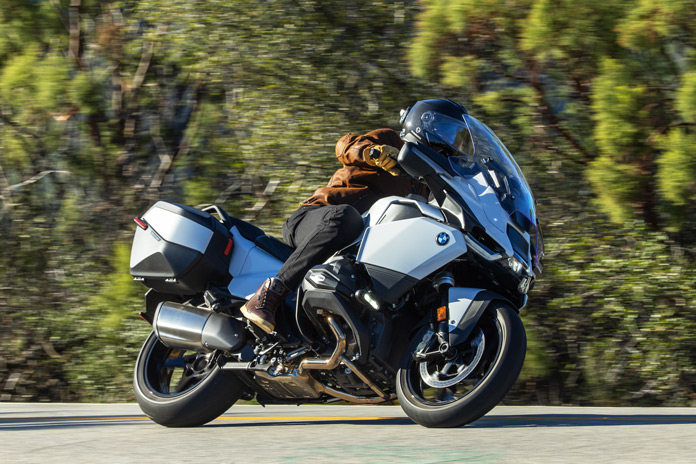
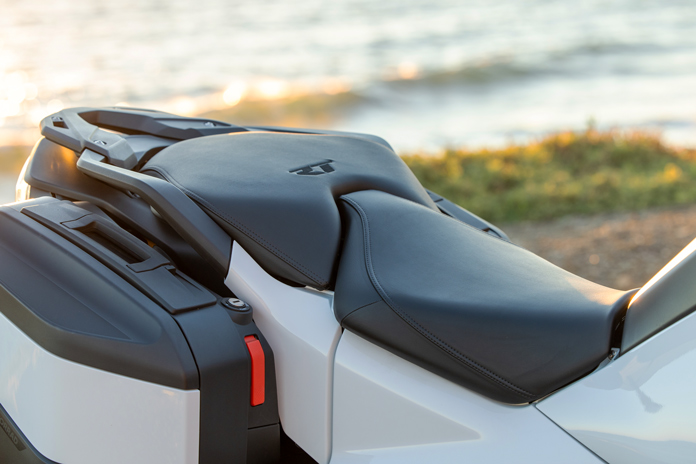
Ergonomically, nothing about the new-gen RT really stood out or required special effort to get immediately comfortable compared to the R 1250 RT. Being 6-foot-2, I raised the seat into the tall position (33.0 inches; low position is 32.2), and the seat is also adjustable for angle. Some have complained that the RT’s narrower windscreen reduces wind protection, but in its highest position it worked great for me and offered more ventilation than the 1250’s screen when lowered. And although BMW has pushed the 1300 in a sportier direction, as evidenced by a wider 190mm rear tire, a narrower and smaller-capacity fuel tank (6.3 gallons vs. 6.6 gallons on the 1250), and more cornering clearance, nothing of these changes negatively impacted me when I droned down the road with the inspiring radar-based Active Cruise Control engaged. In other words, it’s as cozy and relaxed as it ever was.
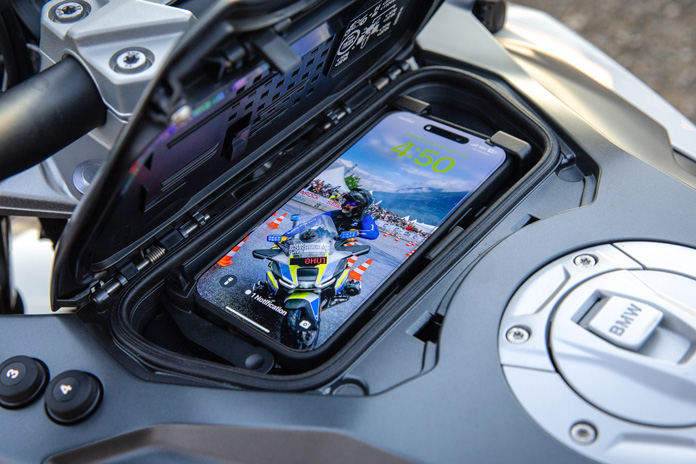
But as soon as I got sporty, the mood changed. The new 1,300cc boxer engine now packs more punch with 145 hp and 110 lb-ft of torque, making it the most powerful (and fun) RT ever made. Yes, it’s smooth and luggable, and it cruises beautifully at 80 mph down the freeway, but when I set it to Dynamic Pro mode, it grabbed me by the shirt collar and wouldn’t let go. That was unusual, because in my experience boxer engines are typically predictable and pedestrian, feeling like they are still in a bit of a fog when the alarm clock goes off. Not this motor. It pulled from the word “go” and kept pulling, stretching the revs much farther between shifts, making corner to corner blasts simple and freeway overtakes an afterthought.
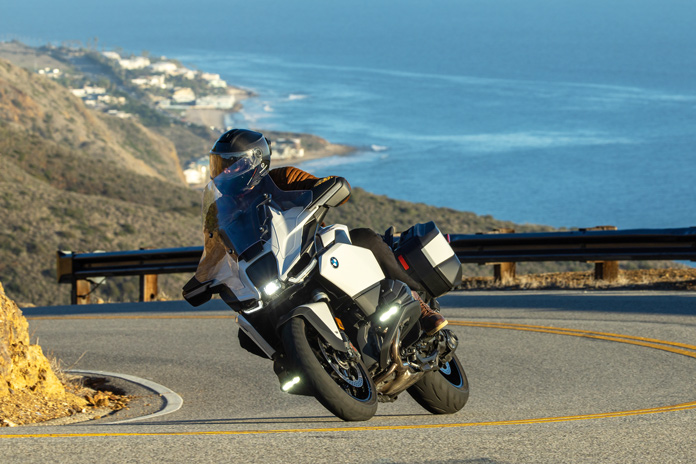
While this new motor will make you feel 30 years younger, you might appreciate the chassis even more, starting with the significantly improved Telelever EVO suspension system. Now, if you’ve never experienced front suspension like this, it’s quite unique in design, function, and overall feel. The system that separates the function of aligning the front wheel from damping. What you will notice most readily while riding a Telelever-equipped BMW is the lack of front-end dive under heavy braking. And while this new system still has this attribute, it is far more robust and rigid when compared to previous versions. The result is far greater steering accuracy and wheel tracking over imperfect road conditions, with almost no deflection when the front wheel is challenged to snap out of line.
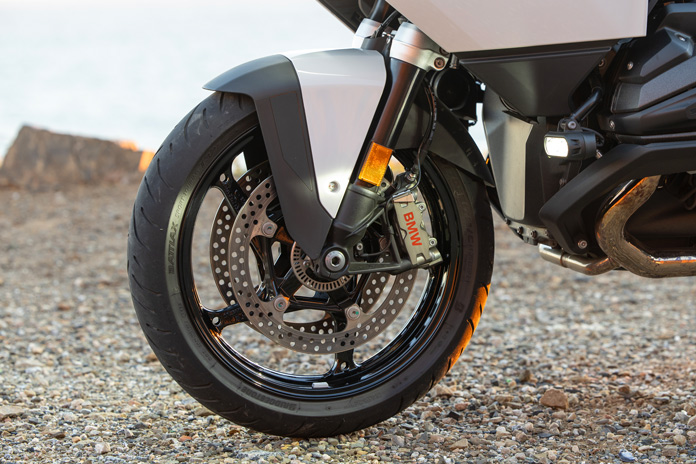
As an example, while droning down the freeway I hunt for imperfect lane cracks that run parallel to the road, letting them grab my front tire to generate uncomfortable steering feedback at the handlebar. On the R 1300 RT, I struggled to place my front wheel into the cracks, because the Telelever was so stable and direct that it just tracked right across them, transmitting nothing through the bars in the process. At some point I had to stand up and peer over the windscreen to see that I was in the cracks. I noticed a similar result when I was leaning over in a turn, and my front tire faced road debris and imperfections. The motorcycle just pushed right past and continued to track beautifully.
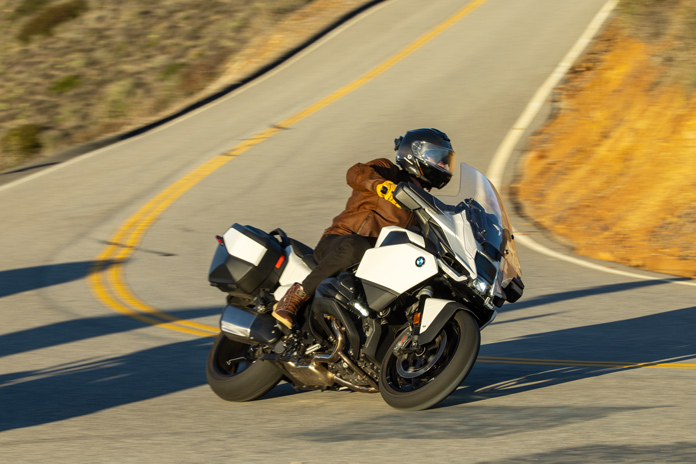
Staying on the topic of suspension, BMW now offers a new Dynamic Chassis Adaption feature, which automatically increases rear ride height travel by 1.2 inches when it reaches 12 mph (it goes back down when you go below 6 mph), which livens up the geometry by decreasing rake and trail, effectively steepening the head angle and making the steering quicker. What’s amazing is that even though the spec sheet indicated the R 1300 RT gained a few pounds (approximately 5 lb dry weight), it feels probably 75 lb lighter than its predecessor when riding it. I’m sure it helped that the R 1300 RT’s gearbox and clutch are now inside the engine housing, resulting in a more compact powertrain with better balance and overall mass centralization. Whatever the reason, this motorcycle felt like a middleweight under me. That is, until I whacked the throttle.
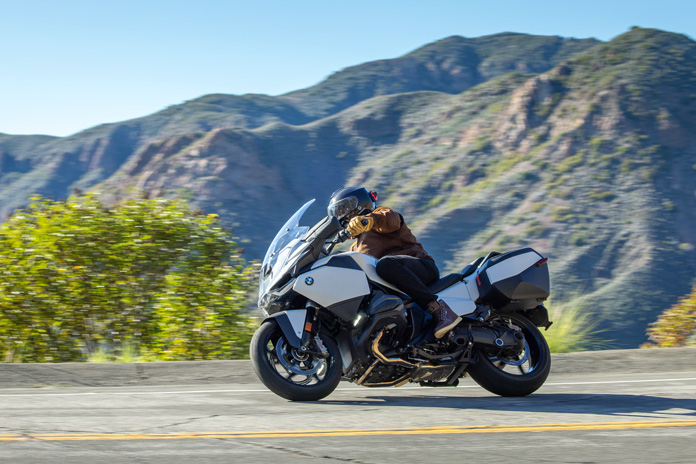
GEAR UP
- Helmet: Schuberth C5 Carbon
- Jacket: Richa Charleston Jacket
- Airbag Vest: Alpinestars Tech-Air 7x
- Gloves: Lee Parks Design Deer Tours
- Pants: Richa Original 2 Jeans
- Protection: Bohn Armored Riding Pant
- Boots: Indie Ridge Crossfield
While BMW’s Ride Modes Pro package is not new, it appears the engineers skipped bowling night in favor of upgrading the system for even greater individual customization than before. In short, Ride Modes Pro is an optional upgrade that allows fine tuning of normally fixed characteristics for things like engine mapping, ABS, traction control, and suspension. When I was cruising, I turned the bike into a Cadillac – mellow, soft, and easygoing from point to point. Then, when the road grew corners, I kicked up my throttle response, reduced my traction control and ABS, and significantly tightened up my suspension. It was like trading in my AARP card for a set of dog tags. Snappy direction changes, front wheel lofts from point to point, and more excitement than any sport tourer I’ve ever thrown a leg over. And when the road straightened out, so did I.
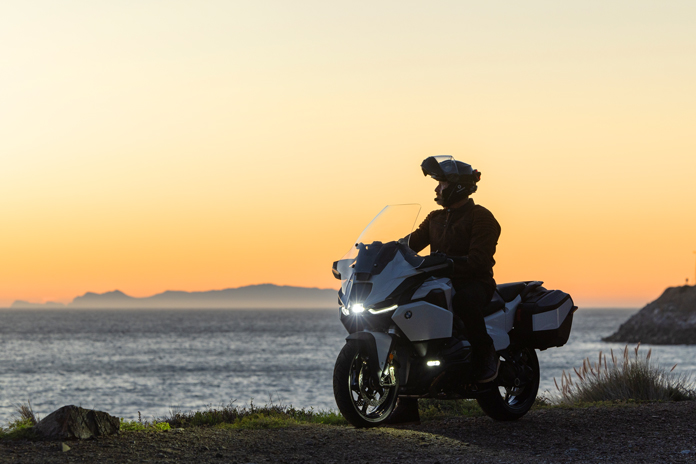
Unfortunately, it wasn’t all champagne wishes and caviar dreams. Almost immediately I noticed was a measured reduction in outright stopping power compared to the R 1250 RT. Looking at the two models side-by-side, it does appear that the new 1300 has 10mm smaller diameter in its front rotors (310mm vs. 320mm) compared to the 1250, so maybe this is the difference. But I’ve ridden and competed on five different 1300 RTs to confirm it wasn’t an isolated incident, and they were all weaker than my old 1250 RT-P (and the other three before it).
And while we’re drinking from a half empty cup, the footpegs on the R 1300 RT need a rethink, because the rubber isolation sleeves rotate around the metal peg over time when you push on them with your legs. I’ve had this issue since the R 1150 RT-P, and as of right now, it appears I still do.
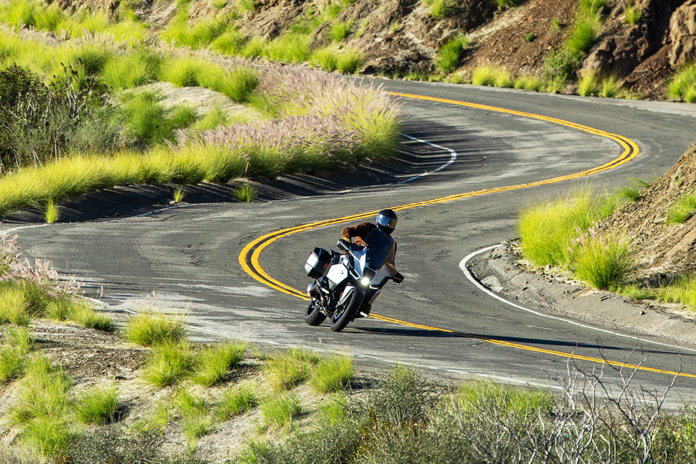
This new BMW R 1300 RT has quite a few new whistles and bells with it, so I’d like to apologize now if I didn’t delve enough into things like the luggage measurements, the audio system, or how the new bodywork made me feel about myself. These things are not what motivate me to call in sick, open the garage, and head out on a journey with a devious grin on my face, so I don’t want to burn the clock telling you about them. After all, I’m pretty sure the dealer has a brochure you can read.
I think it matters most that you appreciate the fact that this motorcycle can live happily in two places at one time. If you need a comfortable cruiser when you’re feeling your age, it’s literally a few clicks, spins, and taps to convert it into a mile-munching limousine, rain or shine. If it’s competition season and you need a snarling beast to go to battle with, just turn everything up to 11 and light the fuse. It’s in this dual universe that the R 1300 RT thrives. And in fact, its masterstroke is its ability to morph from one to the other midstream, when our caffeine-infused bull session slips into the dull twilight of Bengay and ibuprofen. At a base price of $22,645, you’re actually getting two bikes in one.
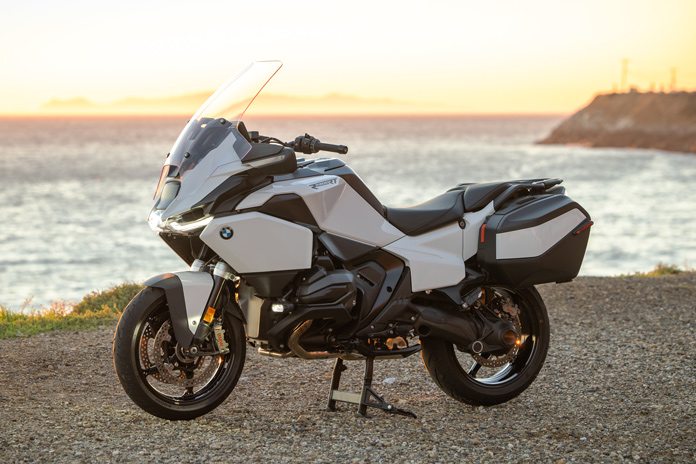
2026 BMW R 1300 RT Specs
- Base Price: $22,645
- Price as Tested: $30,125 (Alpine White Package, ASA)
- Website: BMWMotorcycles.com
- Warranty: 3 yrs., 36,000 miles
- Engine Type: Liquid-cooled longitudinal opposed-Twin, DOHC, 4 valves per cyl.
- Displacement: 1,300cc
- Bore x Stroke: 106.5 x 73.0mm
- Horsepower: 145 @ 7,750 rpm (factory claim)
- Torque: 110 lb-ft @ 6,500 rpm (factory claim)
- Transmission: 6-speed w/ Automated Shift Assistant (as tested)
- Final Drive: Shaft
- Wheelbase: 59.0 in.
- Rake/Trail: 26 degrees/4.5 in.
- Seat Height: 32.2/33.0 in.
- Wet Weight: 620 lb (factory claim)
- Fuel capacity: 6.3 gal.
















Such a great review and also pictures. Loved the read with my morning coffee. Picture of twisties next to ocean made me look twice or three times.
Hey Andrus, I appreciate the positive comment! Glad you liked it.
Not really a road test as much as bmw enthusiasts enthusiasium
Other reviews are much more objective. Not something I expected from RM
Jim-
I can only speak for myself when I say that my goal when I review a motorcycle is to let you in on the experience I had, how it made me feel when I twisted the throttle and dropped it into a turn, communicate some of the bigger changes compared to the outgoing model, things I liked, struggled with, etc. And I think this review provided that. After all, what is a “road test” but a test of the motorcycle out on the road? And by test, a seat-of-the-pants experience out in the world. Oh, and yes, I’m a BMW fan, because BMW makes motorcycles, and I’m a huge fan of motorcycles!
The local dealer has one on the floor. But, and I haven’t asked them , it has a clutch lever ! Are there two options here as there are with the GW? Thanks . as a recently returned to BMW from 30 years on Harleys, I am enjoying my R1200 rt a lot.
Yes, you can get one with or without (ASA) a clutch lever. I’ve spent plenty of time on both, and prefer a clutch due to my slow-speed police training and competition. If I was just commuting and touring around, maybe blasting a canyon now and again? I’d probably get the ASA, as it makes life far simpler without making me feel like I gave up and bought a scooter.
Yessir, the fully-auto option is in fact a (couple) thousand dollar option that comes with some other pretty cool things in the package. Standard bikes have a clutch to pull.
I rode a 2023 r1250rt. I’m 60 yo. It was the easiest bike I have ever ridden. I used to work at a Kawasaki dealership I’ve ridden more bikes than most. The BMW ride made me understand. These new boxers rip and the handling is effortless. What a blast!
Excellent review. You explained how the bike can be ‘tuned’ to your desired riding style, and you made it clear how ASA differs from DCT. That’s helpful to me. I thought the 1200RT felt light, compared to my K1600. If this feels lighter, that’s quite an accomplishment. The new electronic features worry me a bit, however. I’m sure they work well enough, but when the warranty runs out, one could face a hefty repair bill on an already expensive machine. For BMW, it’s the gift that keeps on giving. Have you seen the price of factory replacement parts?!
I hear you- I regularly look on Facebook Marketplace and yell to my wife that I’m finally gonna pull the trigger on an old Chevy El Camino so I don’t have to deal with smog, electronic doo dads, or any of that modern electronic stuff. But then I remember how much I enjoy heated and air conditioned seats, navigation, cruise control, and the immense safety a newer car offers in the event of a collision…
I think motorcycles are similar. Most brands offer electronics options that are mind blowing in their ability to improve the performance, riding experience and overall safety we can expect from a new bike purchase. Where that leaves us 10 years from now from a maintenance standpoint I don’t know. But I think it’s safe to say our weekend toys live a generally less punished existence than our daily commuter vehicles, so odds are you will be looking to upgrade years before its an issue.
But hey, if you wanna grab a Ratio Rite and mix some Blenzall, we can go 50/50 on a sweet Rd 400 I’m looking at?
Turns out I don’t want to own a 70 Chevelle for a 2nd time, and I haven’t filled a gas can since EGO lawn equipment made a home in my shed. The new technology really is better.
Yeah I agree
I went with a modern muscle car, a Challenger RT Scat Pack 1320. It’s probably quicker than the old cars, but has enough old-school DNA to make it interesting. It won’t be confused with any other car. FWIW, my favorite is a 1970 442 W-30.
Quinn, excellent review. Thank you. A friend of mine bought an R1250RT a few years back and loves it. I really appreciate your technical description of Honda’s DCT vs. BMW’s ASA. I was thinking about a new GW a year ago and have friends who have both the manual clutch and the DCT. I’ve read lots of reviews about both and would still personally prefer the manual clutch. I have a Concours 14, which is quite top heavy and feeling heavier as I age. I have a lot of appreciation for the R1250RT and its abundant rider aids. A friend of mine who had a BMW years ago told me that BMW means, “Bring More Wallet”. Ha ha! He wasn’t kidding. An annual tune-up commanded $1,000 or more. Yikes!
Good review. And it sounds like a great ride! Just wondering….did you ever scrape the pegs in corners. A couple of pictures they looked close….but like everywhere else, an inch is as good as a mile. So, did you ever scrape? Thanks
No, I never did, but I regularly scrape pegs on my competition bike, I think that’s cause I counter balance more, whereas I was moving my body position to the inside of the motorcycle so it kept it more upright. I think technique is more important to mitigate that issue.
Thanks for the review. While I enjoy full on technical reviews with all the stats, I also appreciate more personal insights like this article. My next and likely last bike. Triple black, ASA, top box and pro audio. Anybody know when the ’27s go into production? thanks
Back in the day, on board speakers were great, but in helmet bluetooth is much better and also polite. Saves you a few bucks, too.
You will not be disappointed 👍
Quinn, I really enjoyed your experience on this bike. I’m on my third BMW, I see several things appealing on the new RT, but am having so much fun on my 1250RT I won’t be after one in the near future. I do love what they’ve done with moving the tranny and weight centralization. Weight is my only complaint with my bike.
RTs have come a long way. They always do. I have a 2009 RT, bought as a leftover in 2010. I’ve waited too long to upgrade, as I’ve retired and price increases have exceeded inflation. The BMW dealers where I live have them north of 30k with OTD around 35k, maybe more in some cases. I doubt you’ll find a stripped RT anywhere in this country. The base price is a fantasy. That said, it’s an incredible bike.
Hi Quinn
I am thinking on the rt having been on gs varients over many years 1150,1150a,1200,1250,1300,800,etc but fancy a change at 65 so the clutch , i have a 1300 gs rallye with no clutch and manual and auto mode and i like it, however lots of traffic officers prefer a clutch and i think i do for teaching advanced riding with pam in the uk, plus bike control in terms of advancing my own skills, would you say clutch or not for what i would like. i also found when i recently got on an rt with a clutch i felt a bit de-skilled having not had to use a clutched bike for a while which concerned me a bit for later on if i change down bikes etc, penny for your thoughts quinn, i think i read you like a clutch. thanks in advance david uk
Thank you for the review Quinn, very honest and informative. I recently bought the NT1100 and your comment about low speed maneuvering is spot on. I find myself trail braking heavier on the NT than on my 30+ past manual bikes. Thank you for all you do to help bring your experience and safety concepts into modern reality, we appreciate it my friend!!