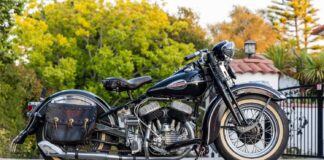
For much of its 50-year history, Rider has advocated All The Gear, All The Time. In other words, wear full protective gear every time you ride. There are various maxims about ATGATT, such as “dress for the crash, not the ride” or “only wear protective gear on the day you plan to crash.” No one intends to crash, but stuff happens, so it’s best to be prepared.
According to the Motorcycle Safety Foundation, “Essential riding gear for street motorcycles includes helmets, eye protection, jackets, pants, gloves, boots, raingear, hearing protection, and high-visibility gear. Wearing the right gear enhances safety and comfort while riding.”
Here at Rider, we wear full-face or modular helmets because we want our entire head – including our faces – to be protected in the event of a crash, but also from wind, rocks, bugs, and other flying debris. We also wear dedicated motorcycle jackets and pants or one-piece suits made of abrasion-resistant materials (normal jeans don’t cut it) with impact armor in critical areas such as the shoulders, elbows, back, and knees. We wear full-fingered, armored gloves and over-the-ankle boots or shoes with built-in protective features.
Recently, we’ve added a new piece of protective gear to our arsenal that I’ve required all staffers to wear anytime they are on a test bike or at a press launch: an airbag vest.
Various styles and types of airbag vests and jackets have been on the market for several years from manufacturers such as Alpinestars, Helite, and Klim. The old style included a tether that connected the garment to the motorcycle (usually the handlebar), and in the event of a crash, the tether would act like a parachute’s ripcord and deploy the airbag.
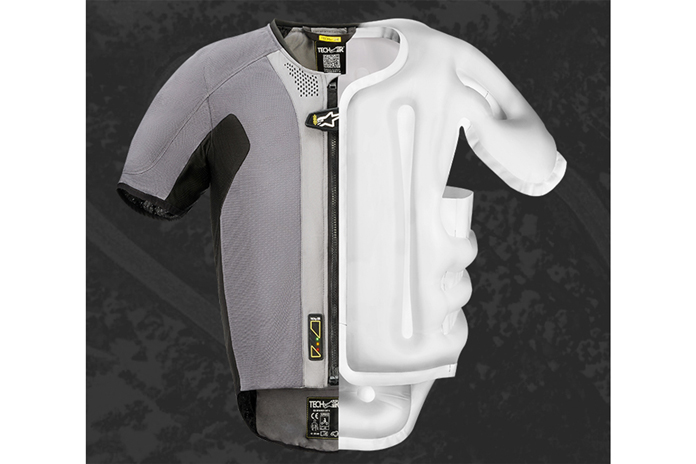
Advancements in technology have enabled the development of “smart” airbags that use gyroscopes, accelerometers, and sophisticated algorithms to determine when the airbag should deploy. The airbag vests we’ve been using are made by Alpinestars, and they are completely autonomous and easy to use.
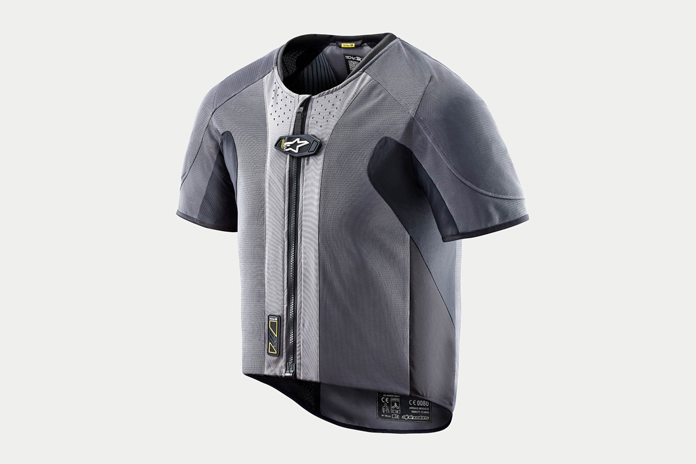
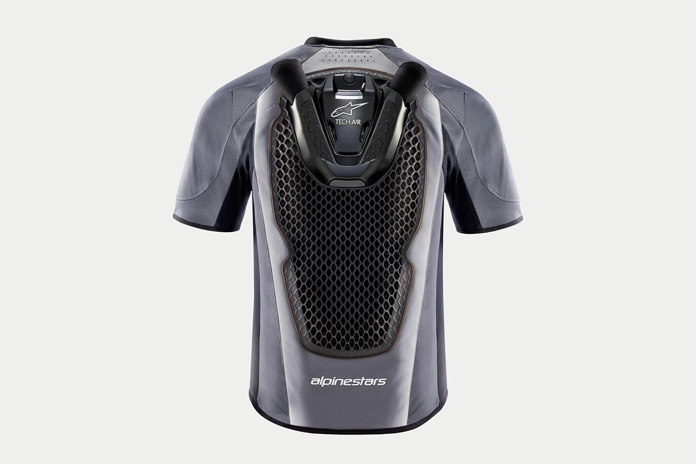
The photos above show the Alpinestars Tech-Air 5 airbag vest, which retails for $789.95 – about the same price as many premium helmets. It’s designed to be worn under a riding jacket made of stretchable material or with 2 inches of room around the chest. Alpinestars claims the Tech-Air 5 reduces impact force by up to 95% better than a CE-certified passive back protector, while also protecting the rider’s shoulders, chest, and ribs.
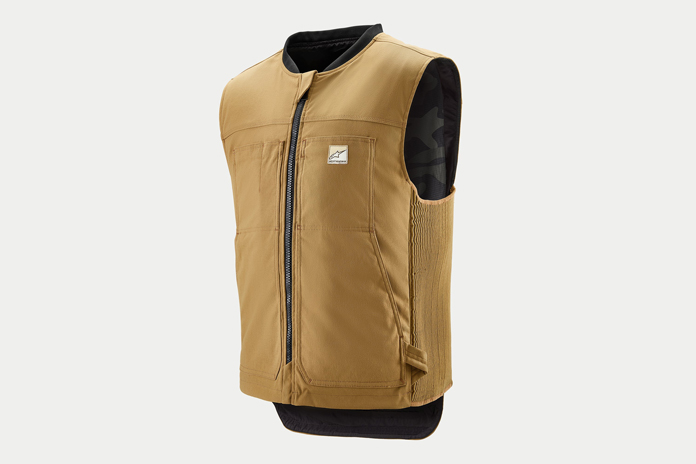
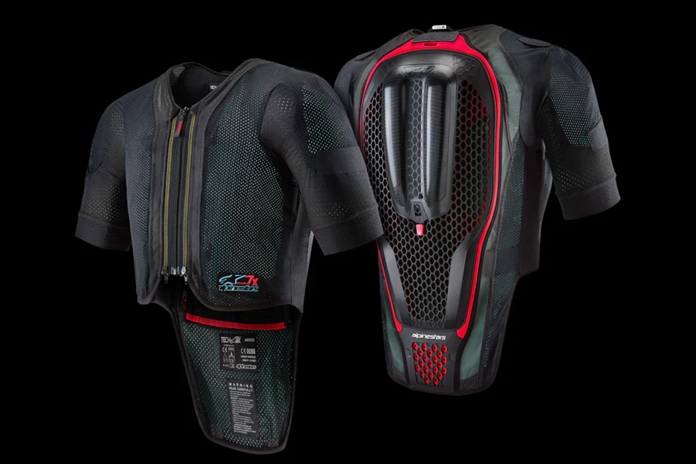
Alpinestars also makes the Tech-Air 3 airbag vest ($599.95), which is smaller and protects less of the torso. A new version of the Tech-Air 3 was recently released that’s designed to be worn over a jacket, and to appeal to V-Twin riders, it comes in tan or black canvas (above, $699.95) or leather ($749.95). There are also off-road and roadrace versions of the Tech-Air system, such as the Tech-Air 7x (below).
Yes, $599.95 or more for a piece of safety equipment isn’t cheap, but it’s a worthwhile investment. I’d pay that much to avoid a broken pinkie, much less a broken collarbone – or worse. Any injury causes pain, and broken bones or internal injuries require costly visits to the doctor or hospital and a lengthy recovery.
While no technology can protect us from all possible injuries, we owe it to ourselves – and our loved ones – to protect our bodies to the highest degree possible. And we all need to ride smart and sober so we have the best chance of avoiding accidents to begin with. Take care, and enjoy the ride!
You can read more about Alpinestars’ various Tech-Air systems on their website.
[This First Gear column was originally published in the May 2024 issue of Rider. Subscription information can be found here.]