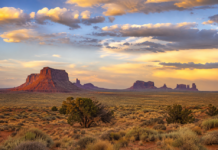
New Mexico captures the romance and mystique of Route 66 unlike any other state.
Stretching nearly 500 miles across deserts, mesas, mountains, and historic pueblos, the New Mexico section of Route 66 introduces travelers to landscapes unlike anything they’ve encountered on the journey so far. The wide-open plains of Texas give way to red rock cliffs, high-desert vistas, and centuries-old communities where Native American, Hispanic, and Anglo cultures converge. For many travelers, this is where Route 66 transforms from a road trip into a true Southwestern adventure.
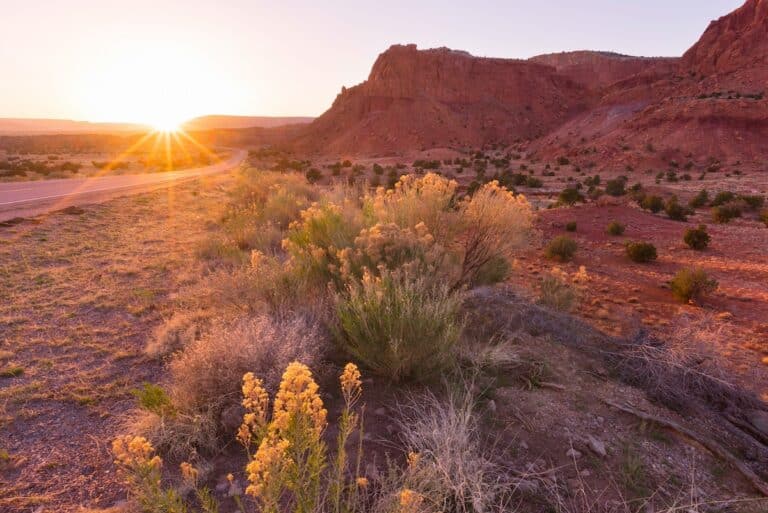
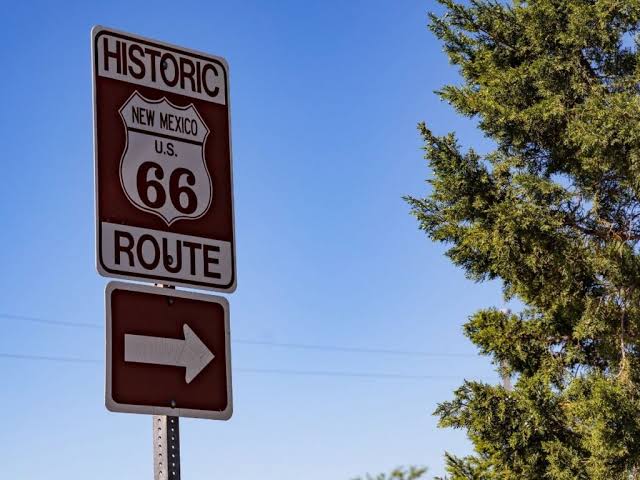
New Mexico also occupies a unique place in Route 66 history. When the highway was established in 1926, it followed a lengthy loop north through Santa Fe before turning south to Albuquerque. This Santa Fe Loop (page X) connected motorists with one of America’s oldest and most culturally significant cities, but it also added considerable mileage to the journey. In 1937, the route was straightened through Albuquerque, creating the alignment most travelers recognize today. New Mexico is home to two distinct Route 66 paths, leaving behind a fascinating legacy to explore.
The state’s Route 66 experience is defined as much by culture as scenery. Trading posts, adobe buildings, neon-lit motels, and family-owned restaurants line surviving stretches of the road. Travelers encounter Native American pueblos, historic Hispanic communities, and a rich artistic heritage that gives New Mexico a character unlike any other Route 66 state.
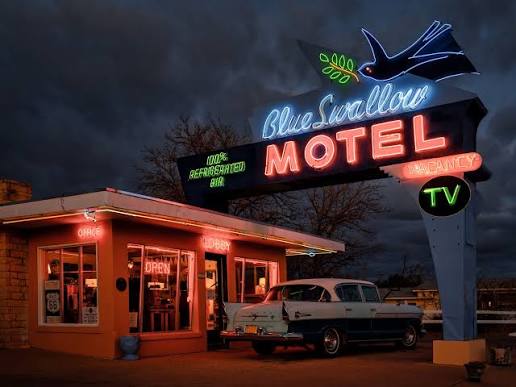
Albuquerque remains one of the highway’s crown jewels. Historic Central Avenue follows one of the old alignments through the city. Farther east, Tucumcari boasts one of the greatest collections of surviving neon signs on Route 66, earning a reputation as one of the most photogenic stops on the entire route. Landmarks like the Blue Swallow Motel continue to draw travelers from around the world.
Farther west, Gallup serves as a gateway to Native American culture and the dramatic red rock landscapes of western New Mexico. Trading posts, historic hotels, and stunning scenery remind visitors that Route 66 was a cultural crossroads.
Perhaps more than any other state, New Mexico captures the sense of discovery that made Route 66 legendary. Between the vibrant sunsets, rich cultural traditions, historic roadside landmarks, and unforgettable desert scenery, it offers a journey that feels both timeless and uniquely American. This is the Land of Enchantment, and along Route 66, it more than lives up to its name.

Travel Resources
At a Glance
Location: Glenrio to Manuelito
Distance: 487 miles
Ride Time: 3-4 days
Best Direction to Ride: East to West for the true Route 66 experience
Skill Level: Beginner to Intermediate
Best Bike Type: Any motorcycle
Maps & Routes
<iframe src="https://www.google.com/maps/d/embed?mid=1Ze2q29bv0-koQ1rBDMq0wayXzHsluQs&ehbc=2E312F&noprof=1" width="640" height="480"></iframe>Click to view New Mexico Route 66 on REVER
Click here to download the GPS files
Road Conditions
New Mexico’s Route 66 offers a diverse mix of riding environments, from wide-open high plains to mountain foothills and urban corridors. Most of the route is paved and well-maintained, though some original alignments feature rougher pavement, cracks, and patches. Long, sweeping curves and gentle elevation changes dominate much of the ride, particularly west of Albuquerque. Winds can be strong across the eastern plains, and afternoon thunderstorms are common during summer. Traffic is generally light outside of Albuquerque and Santa Fe.
Seasonal to Travel
Spring and fall provide the best riding conditions, with mild temperatures, low humidity, and generally clear skies. Summer is popular but can bring afternoon thunderstorms and occasional flash flooding, particularly during monsoon season. Temperatures vary dramatically with elevation, ranging from hot desert conditions near Gallup to cooler mountain air around Santa Fe and Albuquerque. Winter riding is possible but can include snow, ice, and freezing temperatures at higher elevations. Cell service is generally reliable near towns and highways, though some remote stretches still have limited coverage. Layered riding gear is recommended year-round.
Road Food
New Mexico may have the most distinctive food culture along Route 66. The state’s signature flavors revolve around red and green chiles, which find their way into everything from burgers and breakfast burritos to enchiladas and stews. Albuquerque and Santa Fe offer countless local restaurants serving authentic New Mexican cuisine, while smaller towns feature classic diners and roadside cafes that have welcomed Route 66 travelers for decades. Don’t leave without trying a dish with chiles or the famous blue corn pancakes.
Nearby Lodging
Route 66 travelers will find no shortage of memorable places to stay in New Mexico. Tucumcari’s vintage motels are among the most photographed on the entire Mother Road, while Santa Fe offers everything from boutique adobe inns to luxury resorts. Some of the standout motels include The Blue Swallow, Motel Safari, El Rancho Hotel, El Rey Motel, and El Vado Motel.
Riders looking for camping options can find excellent public campgrounds in nearby national forests and state parks, especially around the mountains surrounding Santa Fe and Albuquerque.
Points of Interest
- Blue Swallow Motel
- Tee Pee Curios
- Route 66 Monument
- Santa Rosa Blue Hole
- Route 66 Auto Museum
- Albuquerque Historic Route 66 corridor (Central Avenue)
- Old Town Albuquerque
- Santa Fe (1926–1937 Route 66 alignment)
- Continental Divide
- Gallup historic downtown
- Historic neon signs throughout Tucumcari
- Sandstone cliffs and mesas west of Albuquerque
For the list of 100+ best roadside attractions along Route 66, click here.
If You Have More Time
New Mexico rewards travelers who venture beyond the main Route 66 corridor. The Santa Fe loop, which was part of the original Route 66 alignment until 1937, remains one of the most worthwhile side trips on the entire Mother Road. Riders can explore the city’s historic adobe architecture, vibrant arts scene, and renowned Southwestern cuisine. North of Santa Fe, scenic mountain roads wind through the Sangre de Cristo Mountains, while east of Albuquerque the Turquoise Trail National Scenic Byway offers excellent riding through historic mining towns. Together, these routes showcase the rich blend of Native American, Hispanic, and Anglo cultures that make New Mexico one of the most distinctive states along Route 66.