
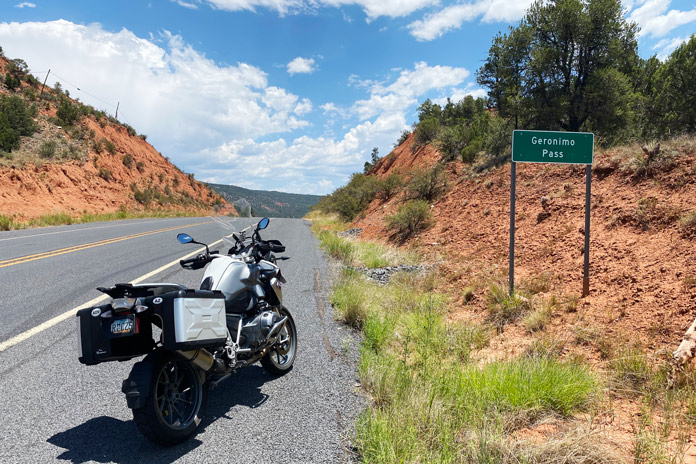
Arizona was added as the last of the contiguous American states in 1912. While “State 48” is relatively young, its military history predates its statehood, and so does my family’s Arizona roots. Three of the state’s historically significant forts are linked by some of the best motorcycling roads in the Southwest. This Arizona motorcycle ride is a personal favorite not only because of its great riding and military history, but also because each fort and its surrounding community is significant to my family narrative.
This tour begins in Pinetop, an outdoor recreation town nestled in the heart of eastern Arizona’s beautiful White Mountains. As I sat in the courtyard of the Lion’s Den Bar & Grill listening to Roger Clyne and The Peacemakers croon about Mexico, tequila, and love, a gentle mountain rain reminded me why I was there in early August rather than toastier regions of the state.
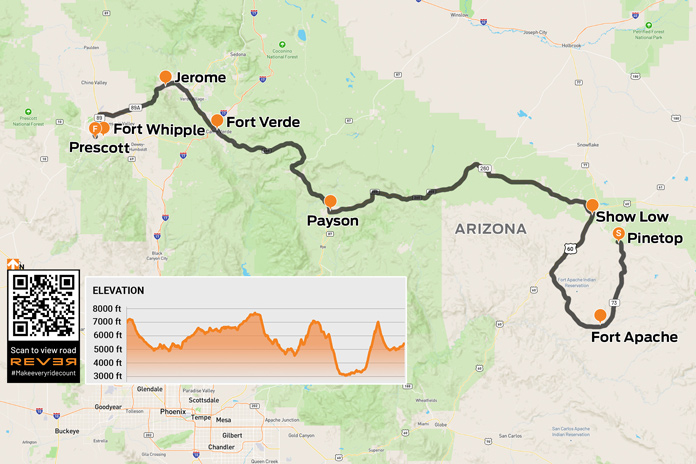
Scan QR code above or click here to view the route on REVER
After the show, I made the short ride back to The Nook Pinetop (see sidebar below), a delightful hotel in the heart of this bustling mountain town. As I sat under the tall pines on the hotel’s tidy grounds and sipped a glass of good bourbon, I contemplated the next day’s ride through Arizona’s territorial history as well as places spanning my personal legacy.
Fort Apache
From Pinetop, I headed south on State Route 260 to State Route 73, a relaxing roll through Arizona’s beautiful, pine-filled high country. I made my way onto the land of the Apache and the reservation on which I spent the first decade of my life. Cedar and oak trees dotted the red sandstone hills, and a feeling of familiarity washed over me. Soon I arrived at the reservation town of Whiteriver.
As I threw down a kickstand in front of the white clapboard Lutheran church that my grandfather established, I reflected on my wonder years spent on that mission compound in the 1960s. My father worked in a logging mill in McNary, but we lived on the mission property in Whiteriver, where I tore around on a homemade minibike, igniting my motorcycle obsession.
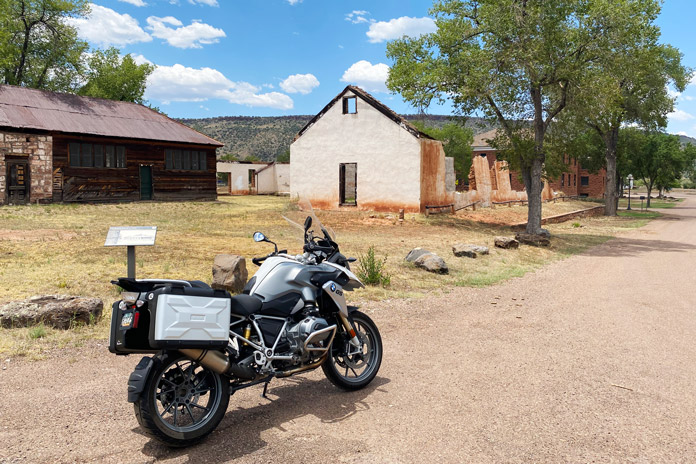
My next stop was Fort Apache, a major outpost during the Apache wars from 1871-1886. It was a military post until 1922, then it became the home of the Theodore Roosevelt Indian Boarding School.
The historic structures were in various stages of deterioration and restoration. General Crook’s log cabin and the impressive commanding officer’s quarters were perfectly restored and sat perched above the flowing East Fork of the White River. I pulled up to the unrestored Old Guard House with deep anticipation. The significance of the building to my family is rooted in a grand misunderstanding. My grandfather, Reverend E. E. Guenther, was imprisoned here for two nights in August of 1918. A series of misguided assumptions led military personnel to believe that my grandfather was a German sympathizer and supporter of the Kaiser. Ultimately, it was correctly determined that the selfless missionary to the Apaches was innocent. He was offered impassioned apologies from the U.S. government and released.
I followed SR-73 as it turned to the west, then turned north on U.S. Route 60. I left the Apache reservation just before arriving in Show Low, a town named after a high-stakes card game between two 1800s settlers.
Fort Verde
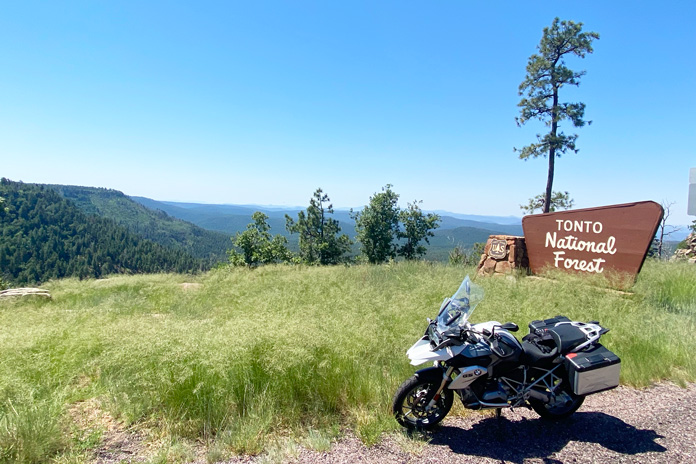
At Show Low, I reconnected with SR‑260 and rode west again, enjoying a scenic ride along Arizona’s Mogollon Rim. It is a great mix of tree‑lined straights and sweeping corners as it connects high‑country towns and mountain lakes. I stopped at an apex of the rim and looked south at the world’s largest stand of contiguous ponderosa pines.
I continued through Payson, Pine, and Strawberry before starting a winding descent toward the Verde Valley, which has been my home for the last five decades. As the descent uncoiled near Camp Verde, I approached the second historic fort.
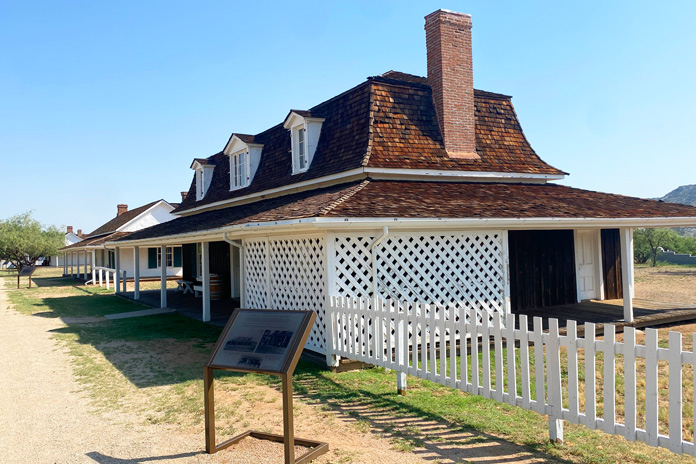
Fort Verde was built in the early 1870s as a major post during the Indian Wars. It was abandoned from 1891 until the 1950s, when a group of dedicated citizens worked to preserve the remaining property and structures. It became a state park in 1970.
As I walked the grounds of the fort, I noticed something that hit me hard: a memorial recognizing the Congressional Medal of Honor recipients who were stationed at Fort Verde. One of the names is Sgt. Alchesay, who was bestowed the honor in 1875 for his valor and leadership as an Apache Scout for the 6th U.S. Cavalry. Fourteen years after Alchesay enlisted as a scout, he became the chief of the White Mountain Apache Tribe and was a dear friend of my grandfather.
Fort Whipple
My tour continued on SR-260 toward the historic town of Clarkdale, where I’ve lived for over 30 years. For good measure, I cruised by my brick, craftsman-style Main Street home. It was built just two years after Arizona became a state, originally serving as housing for miners in the area’s copper boom era.
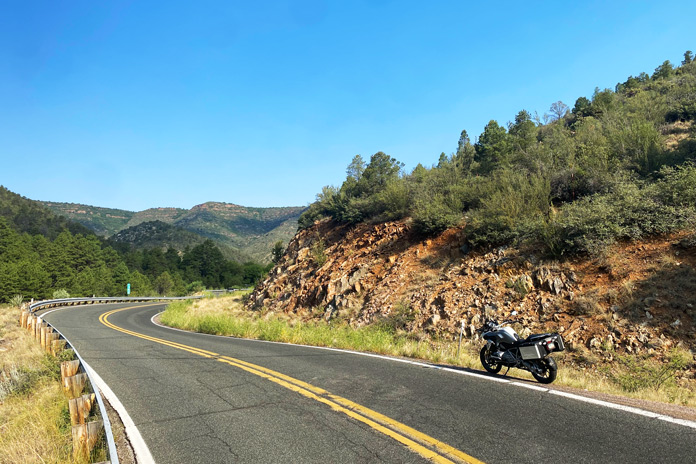
Next, I embarked on one of the best motorcycling roads in Arizona, State Route 89A, which climbs from 3,500 feet to over 7,000 feet in less than 14 miles. The mix of hairpins and sweeping corners makes this a primo motorcycling road, and I am lucky to have it in my own backyard.
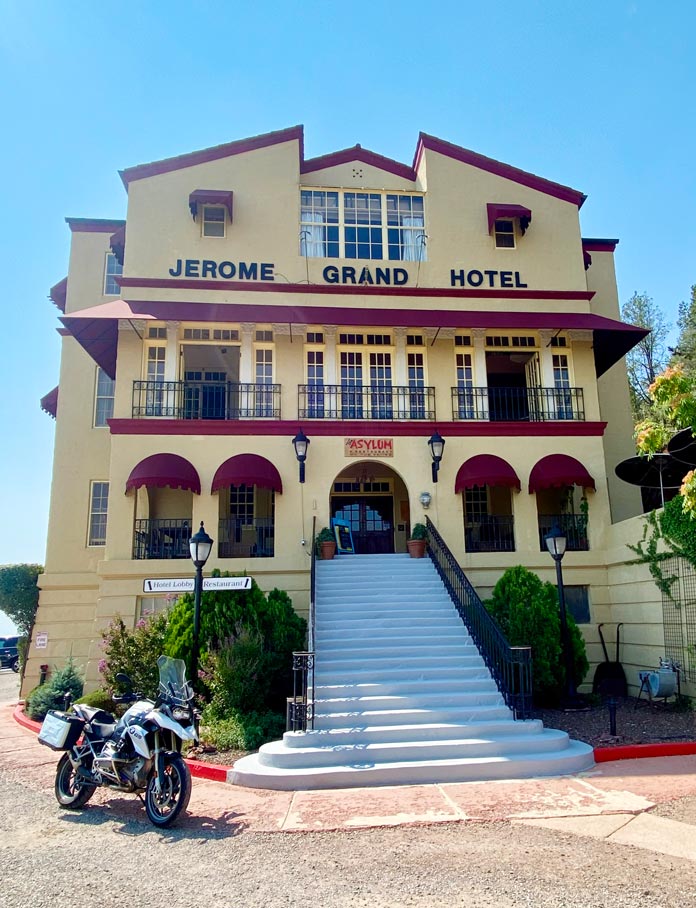
I rolled into the historic mining town of Jerome, which was founded in the 1870s. Its population ballooned to over 10,000 miners, merchants, and women of the night during the copper boom of the 1920s. Some of those miners certainly lived in my Clarkdale house. Jerome became a ghost town in the mid-1900s before resurging into a vibrant art and tourism destination.
After Jerome, the highway winds even tighter to the summit of Mingus Mountain. Back in the pines, I used every centimeter of my tires’ tread climbing and then descending into Prescott Valley, where SR-89A straightens as it passes through high grasslands. A short stint on State Route 89 took me to my last stop.
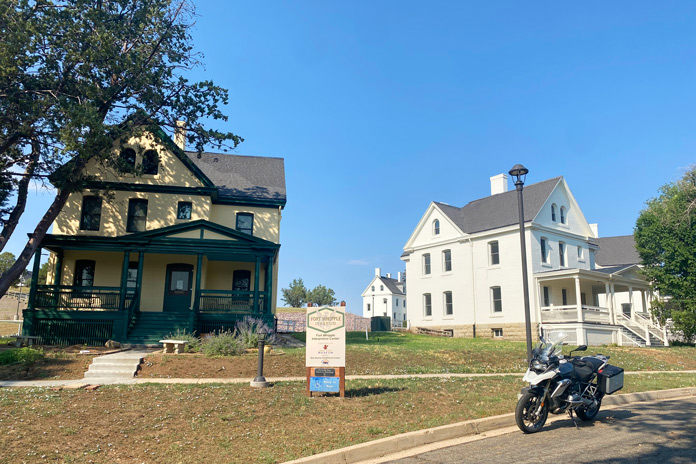
Fort Whipple was another important outpost in the Indian Wars and has served as a military medical facility since the Spanish-American War. I drove my father, a WWII veteran, to the VA hospital on the base on several occasions before his passing. He contracted malaria while serving in the South Pacific theater, and Fort Whipple was his primary care facility. It was on one of those drives that I had my only extended discussion with my father about his WWII service.
This 300-mile tour is a great ride through Arizona’s military past, and for me, an exploration of my family’s legacy in the Arizona Territory and State 48.
See all of Rider‘s touring stories here.
LODGING SPOTLIGHT: The Nook Pinetop
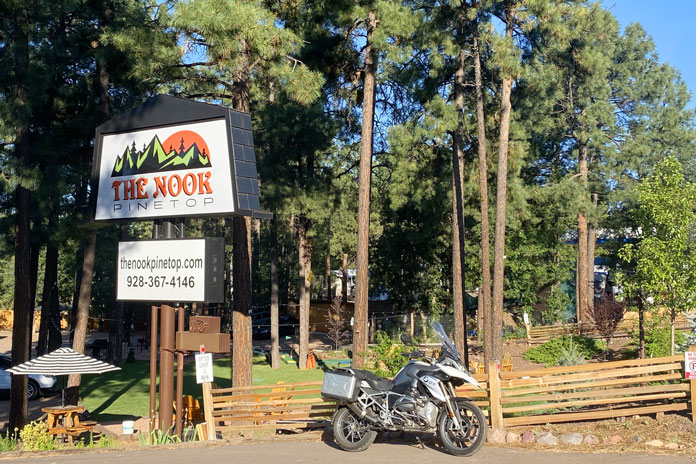
The Nook Pinetop, a remodeled historic motor hotel in the center of Pinetop, is a perfect base for any exploration of Arizona’s White Mountains. Its rooms are decorated in outdoor motifs, and the courtyard area is a great gathering spot with a barbecue area and tables, minigolf, and other outdoor games. Visit TheNookPinetop.com.
Arizona Motorcycle Ride
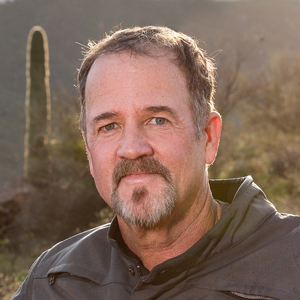
Tim Kessel, a former English teacher, makes his home in the mountains of north-central Arizona. He has been a Rider contributor for nearly two decades. Exploring great roads and intriguing destinations has been a lifelong passion.



Great article Tim. I live in Camp Verde and ride those roads a lot on my Yamaha FJR. I’m retired and would love to ride with you some time.
Mark
Great write-up! As a 46 year Arizona resident, I spent 4 months/year in Pinetop for a dozen years, from 2006-2018 and I’ve ridden the White Mts. extensively. You are not wrong about 89A being an AWESOME ride!!