


There are few names in motorcycling that stir the imagination quite like Norton.
Long before the superbike horsepower wars and tales of adventure motorcycles conquering continents, Norton earned its reputation on racetracks and winding British roads.
The company’s legendary Manx racers dominated the Tourist Trophy on the Isle of Man for decades, while the Commando became one of the defining motorcycles of its era. For generations of enthusiasts, the Norton name represented speed, innovation, and unmistakable British character. Unfortunately, reputation isn’t built on heritage alone.
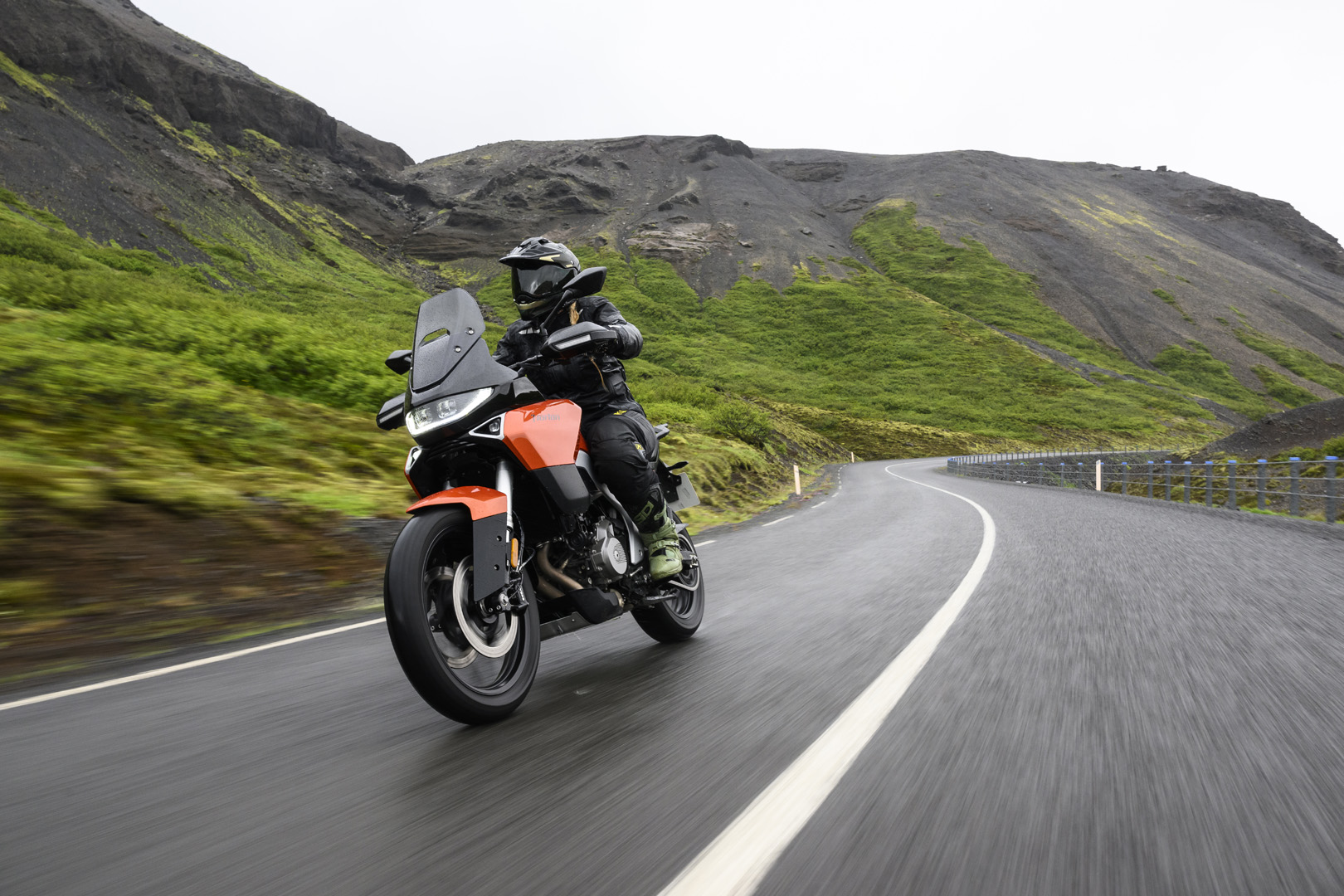
The last few decades have been rather arduous for the iconic manufacturer. Ownership changes, financial troubles, failed promises, and eventual insolvency threatened to reduce Norton to little more than a nostalgic footnote in motorcycling history. Then in 2020, TVS Motor Company, an Indian multinational motorcycle manufacturer, acquired the brand, investing heavily in new facilities, engineering, and quality control. Its goal was to revive Norton as a legitimate premium motorcycle manufacturer. Which brings us to the Atlas.
More than just another middleweight motorcycle, the Atlas represents an opportunity for Norton and its parent company, TVS, to demonstrate what the brand can become under new leadership. While nostalgia may get riders into the showroom, only a well-engineered motorcycle will convince them to sign on the dotted line.
What’s in a name?
The Atlas name carries far more significance than you might imagine. Unlike many modern model names invented by a marketing department, “Atlas” is rooted in Norton’s own history and represents one of the company’s most important turning points.
The original Norton Atlas debuted in 1962 as an evolution of the Dominator parallel-Twin. American riders – one of Norton’s most important customer bases – were demanding larger, faster motorcycles capable of cruising comfortably at the higher speeds made possible by the expanding U.S. highway system. In response, Norton enlarged its proven 650cc Dominator engine to 745cc, creating the Atlas.
At the time, the Atlas was one of the fastest production motorcycles available. Its overhead-valve parallel-Twin produced around 50 horsepower – an impressive figure in the early 1960s – and could top 120 mph under ideal conditions. It retained Norton’s renowned Featherbed frame, which was widely considered the finest-handling motorcycle chassis of its era. The combination of strong performance and exceptional handling made the Atlas especially popular in the United States, where riders appreciated its ability to cover long distances while still feeling nimble on twisty roads.
But the Atlas also exposed the limitations of Norton’s quickly aging design. The larger displacement brought more power, but it also amplified vibration. At highway speeds, the big parallel-Twin could become fatiguing, earning both admiration for its performance and criticism for its roughness. Norton engineers knew they had reached the practical limits of the design, but rather than abandoning the platform, they solved the problem in a characteristically innovative way.
In 1967, Norton introduced the Commando, which used a further-developed version of the Atlas engine mounted in the revolutionary Isolastic frame. By isolating the engine, transmission, and swingarm from the chassis with rubber mounts, Norton dramatically reduced vibration without sacrificing the handling characteristics for which the company had become famous. In many ways, the Commando owes its existence to the Atlas. Without the lessons learned from the Atlas, Norton’s most celebrated road motorcycle may never have been developed.
After production ended in the late 1960s, the Atlas name disappeared from Norton’s lineup for more than half a century.
Design & Engine
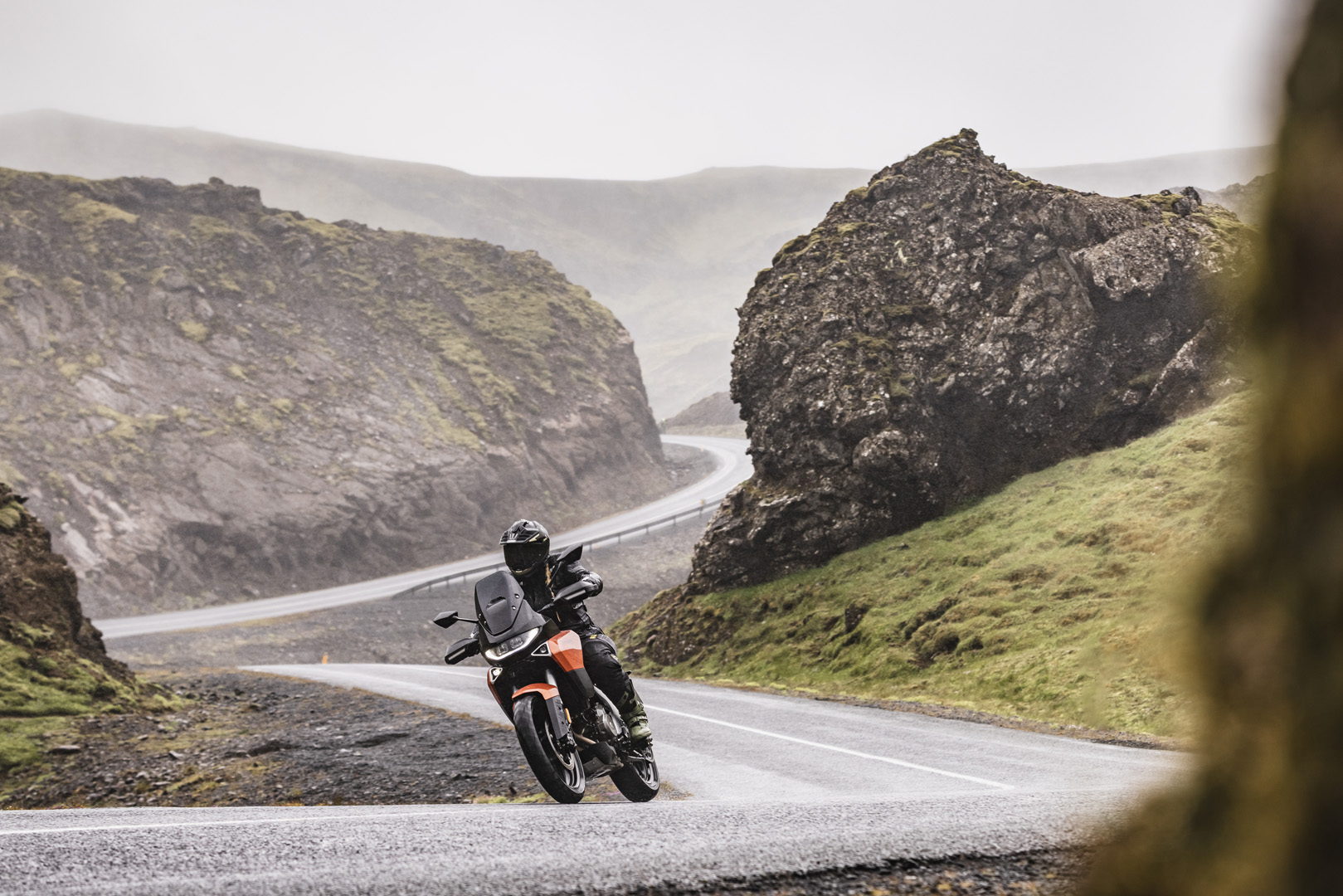
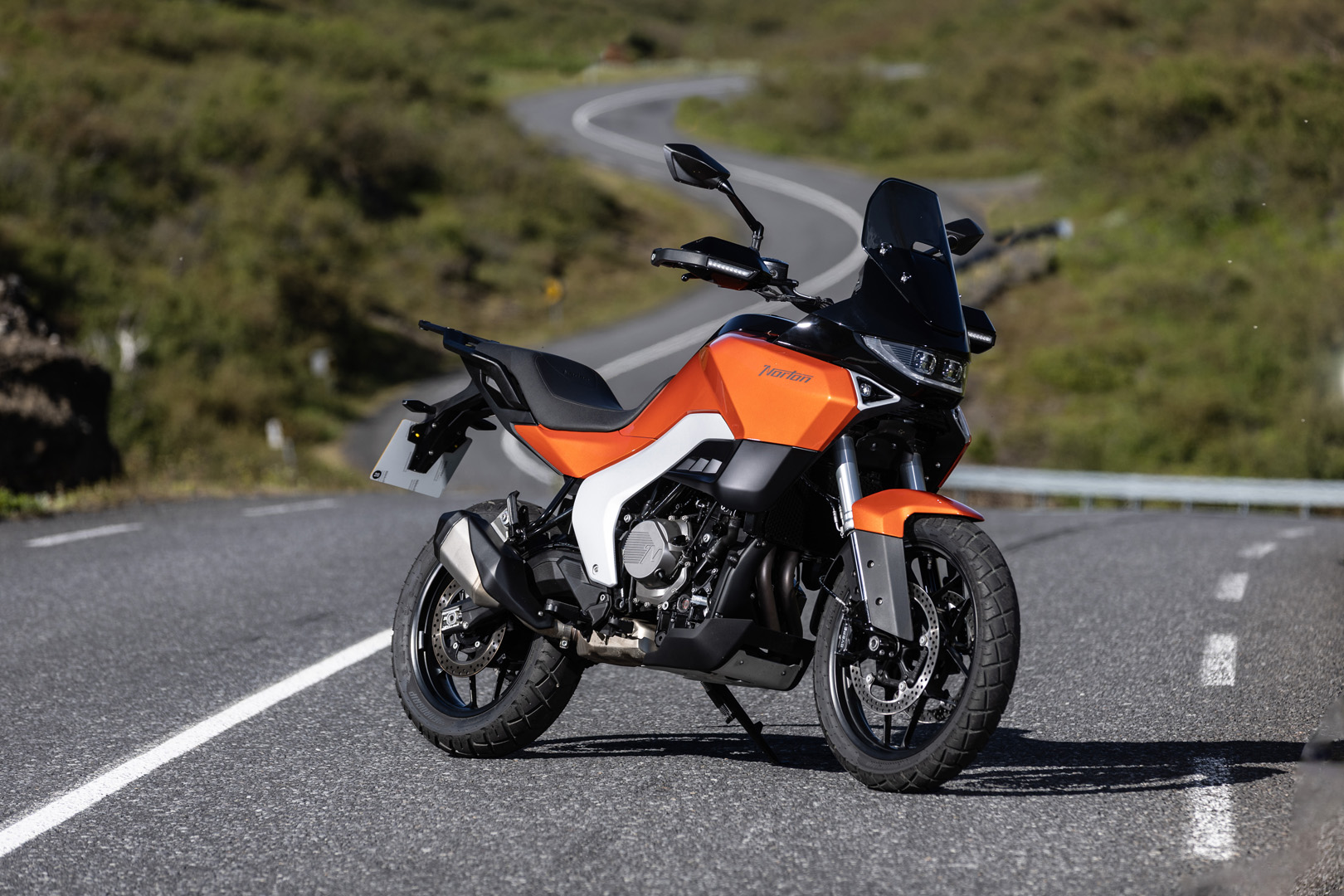
At first glance, today’s Atlas doesn’t scream for attention. Instead, it relies on clean lines and restrained styling. Rather than chasing the increasingly rugged (and often alien-like) appearance of full-size adventure bikes, the Atlas leans toward the growing category of road-focused crossover motorcycles. It offers upright ergonomics, comfortable all-day riding, and enough sporting capability to make a winding back road every bit as enjoyable as the interstate that leads there.
The heart of the Atlas is an all-new liquid-cooled 585cc parallel-Twin featuring a 270-degree crankshaft. That crank configuration has become something of a sweet spot among modern middleweight Twins, delivering the uneven firing order and broad torque characteristics that riders often associate with larger V-Twins, while maintaining the compact packaging and efficiency of a parallel. Norton claims 69 hp and 42 lb-ft of torque, numbers that place the Atlas squarely in the middle of one of motorcycling’s hottest segments.
If those specifications sound familiar, that’s because they are. Nearly every major manufacturer has recognized the appeal of lightweight, approachable motorcycles capable of handling commuting, weekend canyon rides, and light touring without intimidating new riders or overwhelming experienced ones. The Atlas enters a crowded field populated by many middleweight 270-degree parallel-Twins. Though the Atlas is one of the few that falls below the 600cc threshold.
However, the Atlas isn’t just competing against other bikes in the category; it has to compete against every memory people have of what a Norton should be. That’s a much harder fight to win.
To improve efficiency and reduce internal friction, the 585cc engine uses plasma-coated cylinder bores that minimize piston ring drag, while also helping move heat away from the combustion chamber more effectively than conventional liners. A dual oil pump system works with a crankcase scavenging pump to create a slight vacuum, reducing oil aeration and rotational losses. Borrowing technology from racing applications, the cassette-style transmission can be removed from the side of the engine for easier servicing. But is this technological development, which increases the overall price of the machine, going to deter potential buyers looking at middleweight cross-touring motorcycles? We’ll have to wait and see.
Chassis & Electronics Features
A tubular steel frame provides the foundation, paired with 7 inches of travel from its KYB suspension. The front is fully adjustable using tools, and the rear has adjustable rebound and a hand crank pre-load adjuster. The dual-stroke rear shock ensures a controlled stiffer damping rate through the final 20% of travel, where you might end up if you’re carrying heavy luggage or landing big jumps.
Braking duties are handled by radial-mounted ByBre calipers gripping twin front discs, while cast-aluminum wheels reinforce the Atlas’s road-oriented intentions. Spoked wheels are available as an option for those looking to spend more time off-road.
The Atlas uses modern electronic interventions, including ride-by-wire throttle, selectable ride modes, cornering traction control, cornering ABS, wheelie and rear lift control, up and down quickshifter, cruise control, and Drag Torque Control. The Apex package adds electronic combined braking, cornering lights, and a hill-hold system.
GEAR UP
Helmet: Shoei Hornet X2
Jacket: Klim Latitude
Pants: Klim Dakar
Knee Braces: Ossur CTI Custom
Gloves: Cortech Standard Issue Happy Face
Boots: Sidi CrossAir
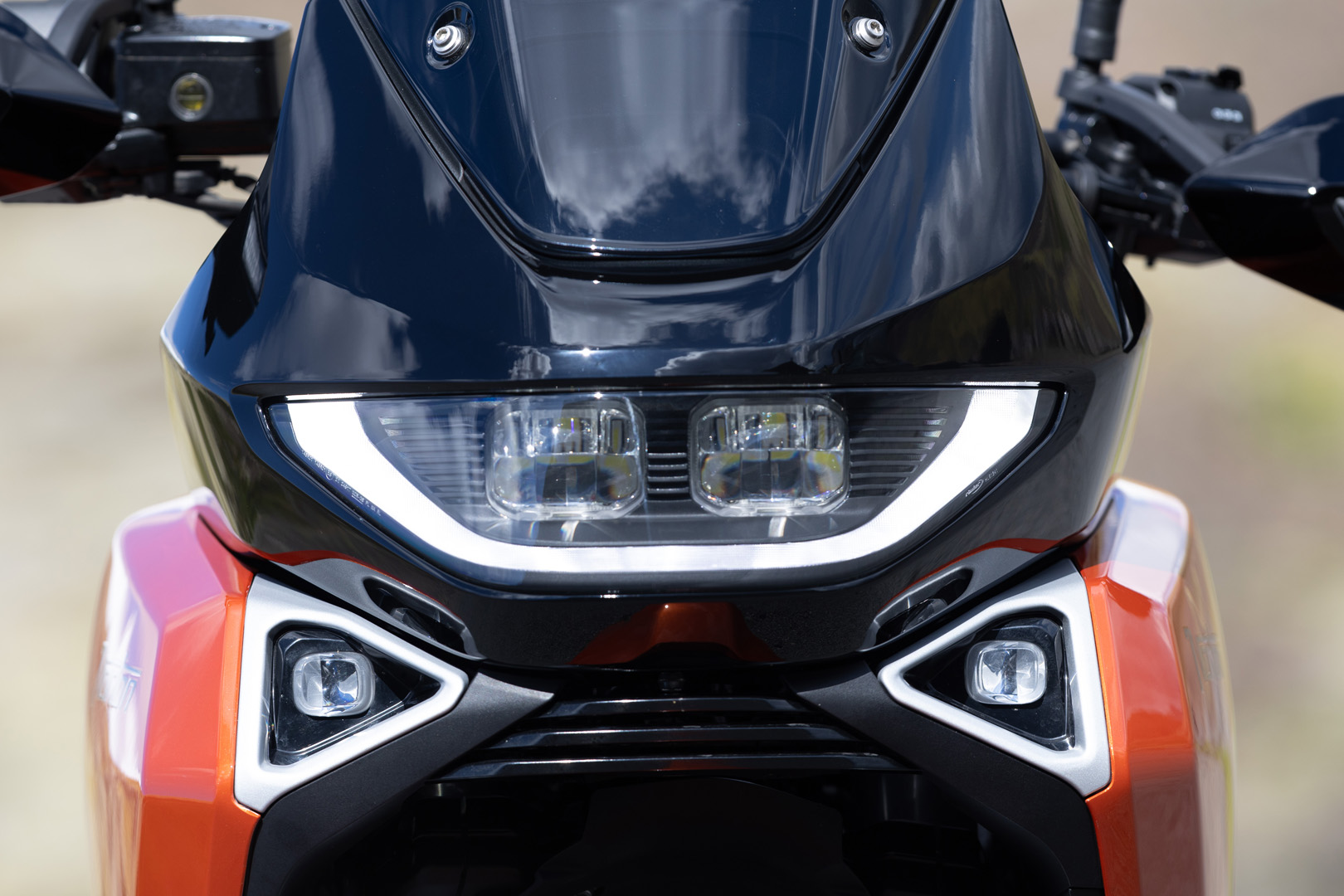
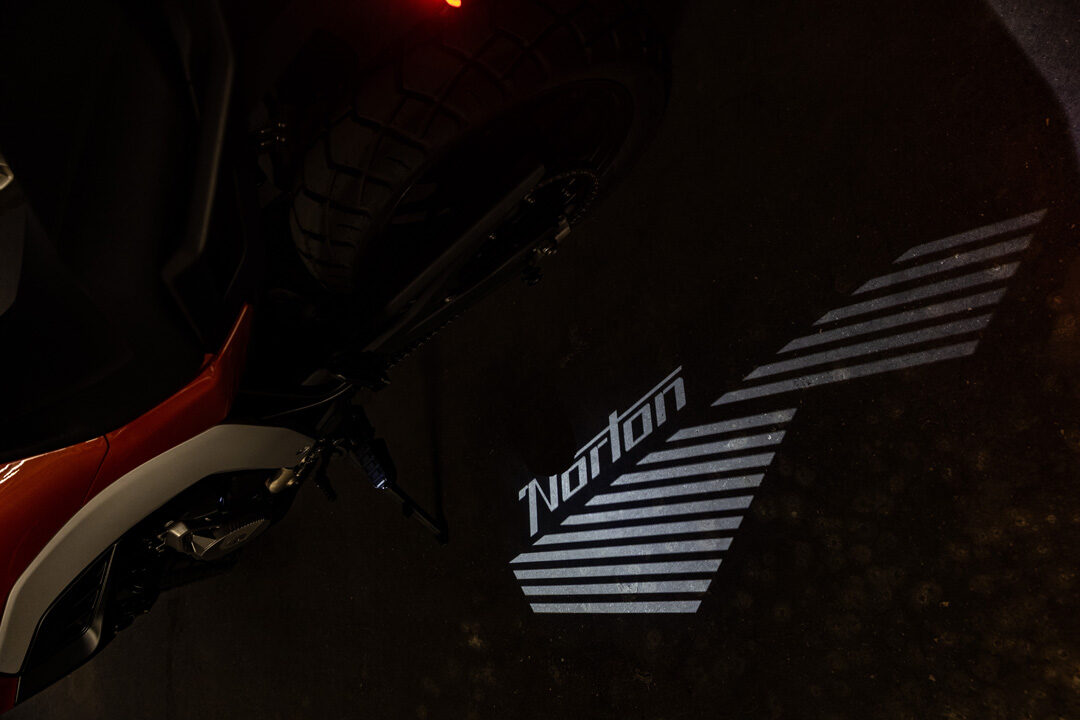
Through its full-color TFT display, the Atlas also features over-the-air software updates, built-in eSIM connectivity, and Bluetooth integration through Norton’s smartphone app. Its lighting package includes a dynamic LED headlight that increases illumination at speeds above 35 mph and a distinctive puddle lamp that projects the Norton logo onto the ground.
There’s enough electronics here to improve the ride characteristics without venturing into the increasingly complex suite of radar systems, semi-active suspension, or countless rider-adjustment menus that are synonymous with many larger touring motorcycles. It’s designed to enhance the riding experience rather than dominate it, or so Norton claims.
Perhaps that’s one of the Atlas’s most intriguing qualities. In an era where motorcycles are increasingly defined by ever-growing spec-sheets and escalating horsepower figures and electronics packages, Norton seems to be chasing something less tangible. Instead, it appears to focus on balance – a motorcycle intended to be enjoyable on everyday roads, adequately comfortable for extended touring, and engaging enough to remind riders why they fell in love with motorcycling in the first place.
Whether that philosophy translates into a motorcycle worthy of the Norton badge ultimately depends on what happens once the wheels begin turning. Now it’s time to go for a ride.
A Shockingly Good Time
My first impression after swinging a leg over the Atlas is that the riding position is very comfortable, at least when sitting. The sleek design along the side of the tank and seat leaves nothing for my knee-brace hinges to get caught on, and it’s quite narrow, which makes touching the ground on both sides easier. I’m 5-foot-10, and with the Atlas’ 33.3-inch seat height, I could easily flat foot on both sides. The handlebar reach was perfect for me, and even after a few hours on the highway, I still felt comfortable.
Once we finally reached the first gravel road, it was a different story. When I stood to assume the attack position, the handlebar seemed low and close to the knees. I struggled to find a good balance point, feeling either too far forward or too far backward to manage the chassis sliding around underneath me. It seemed too cramped and too long at the same time. If I were to own this bike, I’d have to make some adjustments to the standing rider triangle for instances such as this.
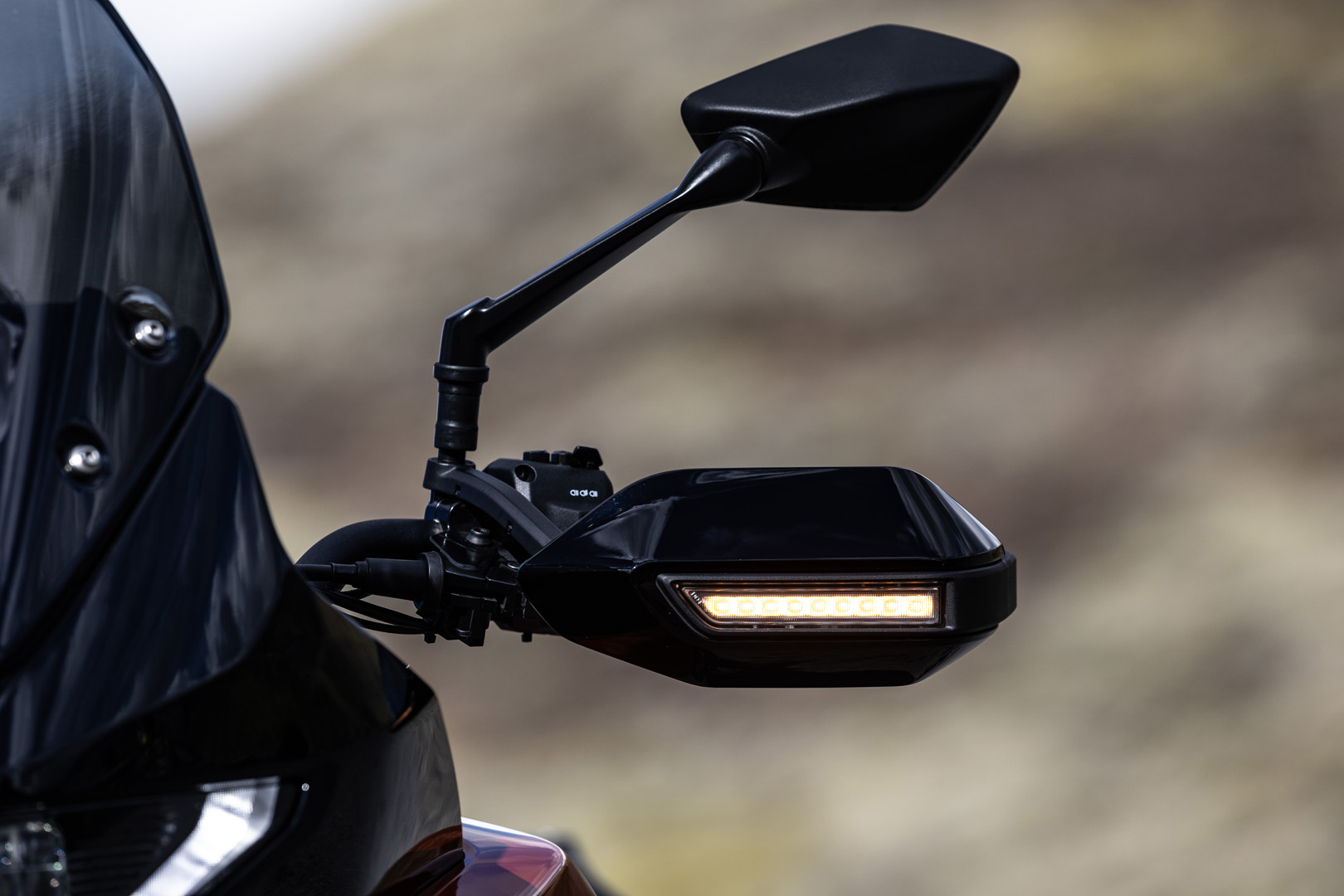
When we departed, I knew we were in for a cold and wet ride, so the first thing I did was turn the heated grips to level three. I wore thin gloves, my personal preference, expecting the heated grips on the bike to work. They didn’t. Stopping an hour later, I warmed my hands on the exhaust to regain some feeling and warmth. Everyone else in the group said the heated grips were working for them, albeit not as hot as they’d hoped. The kicker was when I accidentally touched a cluster of wires coming off the right side of the handlebar and felt a low but constant electric shock, as if I had brushed up against a cattle fence. I was the only one experiencing this issue, so we’ll chock it up to some sort of faulty circuit or floating ground.
On the other hand, the cruise control worked excellently. The system is actuated from the left side of the handlebar, as it should be, and allowed me to remove my hand from the throttle occasionally for warming. Also on the left side of the handlebar is a direct traction control button, allowing you to turn it on or off easily on the fly, rather than having to sort through menus in the dash to make changes. A nice touch.
A standout feature on the Apex variant is the Hill Hold, which honestly I despise on most bikes due to the clunky nature and inability to easily disengage when you want to. On the Norton, you can freewheel forward and backwards as much as you’d like using the clutch and throttle. When you are ready to engage Hill Hold, simply tap your front brake lever to lock the bike in position. When you’re ready to take off or if you need to roll back slightly, simply release the clutch enough to begin a forward tug, then either take off or pull the clutch back in to roll backwards. The system works perfectly.
Performance
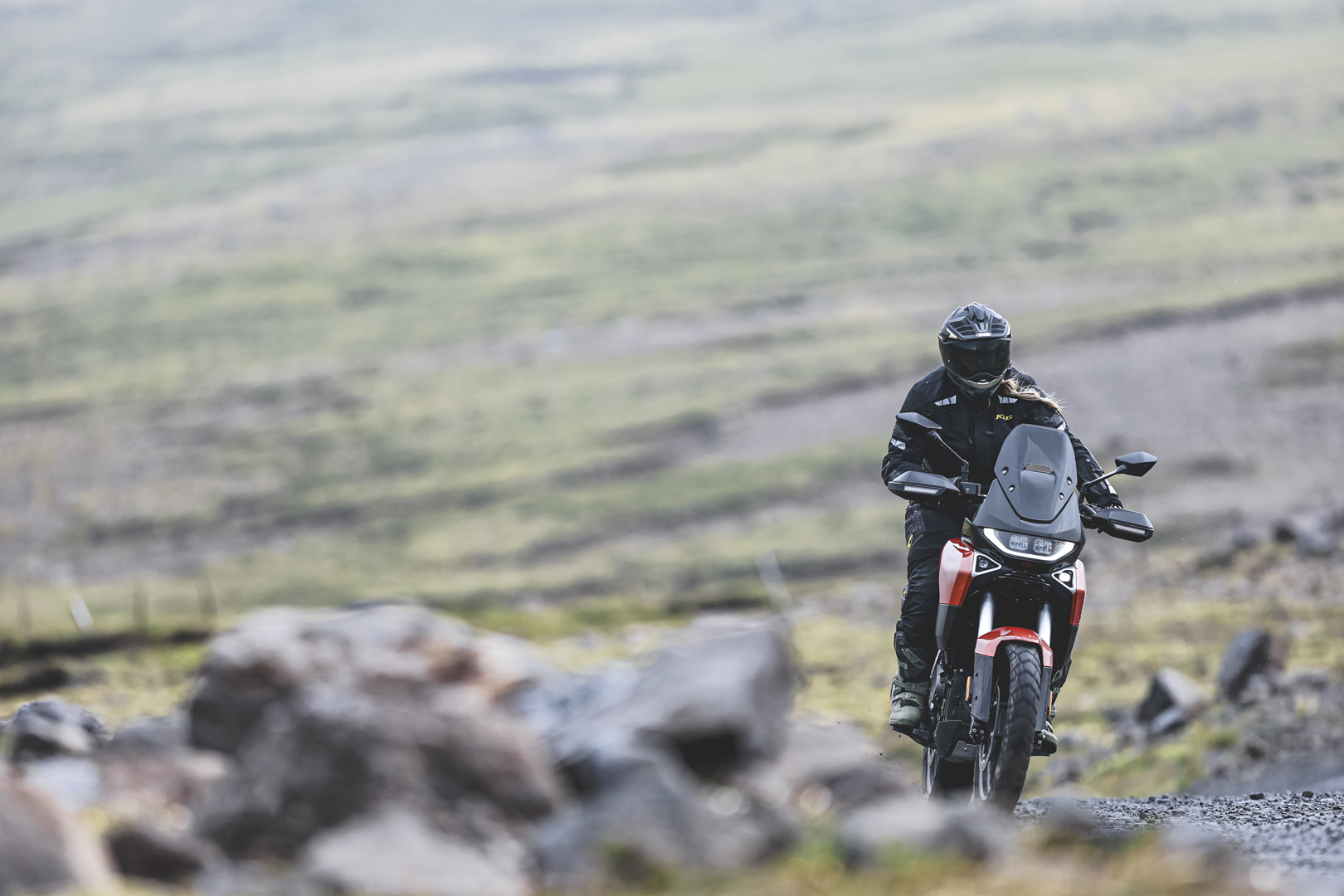
Twisting the throttle brought an instant smile to my face. While only 585cc, the parallel-Twin engine delivers 69 hp, and considering the Atlas weighs just 414 lbs, this makes for quite a spunky little bike. The power delivery was predictable but satisfying and quite fun. Not to mention it sounds great.
The engine is also incredibly smooth. I noticed little to no vibration in the touch points, and the torque curve is linear throughout the rev range, making it feel predictable no matter when or where you twist the throttle. Norton learned a thing or two from its ancestral namesake.
As we got to the twistier roads, the chassis and handling began to shine. I leaned hard into the corners and was pleasantly surprised that the Atlas felt easy to transition left and right and that the chassis felt solid and planted. The handling was playful and smooth as I tossed the Atlas side to side, moving well above the speed limit to get a sense of the bike’s capabilities.
I was really enjoying the ride until we came to a downhill left hand corner. As I set up for the turn, I downshifted twice, getting right into the rpm range I wanted for the corner. I selected my entry point and began to lean, relying on that engine feel to keep me where I wanted to be in the lane. Then all of a sudden, just as I was about to reach the apex of the corner, the engine braking dropped off dramatically, so much so that it started to push the bike forward, accelerating at a point in the corner I least wanted that to happen.
I was riding in Rain mode with the Drag Torque Control (DTC) enabled, which uses sensors to monitor the speed of both wheels. When braking force exceeds the tire’s mechanical grip, or at least the grip the computer thinks it has, the system intervenes by reducing the engine braking, resulting in the aforementioned surge mid-corner. It was not a good feeling.
After switching into Sport mode and riding the same corner again, I noticed less of this effect. The tolerances in Rain mode are set quite low, so this effect is exaggerated. In Sport mode, the sensors allow more engine braking closer to the tires’ grip limits. I chose to turn the feature off entirely for the remainder of the ride.
In addition, the quickshifter was not my favorite amongst those that I’ve tested. It lagged considerably during aggressive upshifting and was a bit clunky going down aggressively. This system is one I would put into the “lazy shifting” category rather than the performance shifting one. Also, if you leave the quickshifter turned on but decide to use the clutch, it becomes incredibly clunky. After a bit of testing, I decided to leave that turned off for the remainder of the ride too.
Another feature that proved frustrating during our test ride was the electronic key system. Rather than using a traditional proximity key fob, the Atlas requires riders to press the unlock button on the fob before the motorcycle can be started. If the ignition is switched off, the process must be repeated, meaning the fob has to come back out of your pocket every time – quite an inconvenience when you’ve got cold, wet hands and rain gear on. I tried to just leave my ignition “on” anytime I stopped the bike.
I hate to be the one who says “these electronics are ruining the ride, I’d rather have an analog bike,” but when it comes to the Atlas, it’s absolutely the case with the DTC, quickshifter, and key fob. Hopefully these things are updated by Norton as time goes on. Throughout our testing, the engineers were actively collecting feedback and making updates, so I’d say that should happen pretty quickly. Norton engineers also indicated that a conventional proximity-style key fob is already in development.
Back to those wet roads and some thoughts on traction. The stock tires on this bike are the Eurogrip Explo R Plus – also developed under TVS by the company Euro Grip – used specifically on this model for their performance in all conditions. While this isn’t a tire test, I did make a note that the rubber was quite impressive given the cold and wet riding conditions.
Off The Pavement
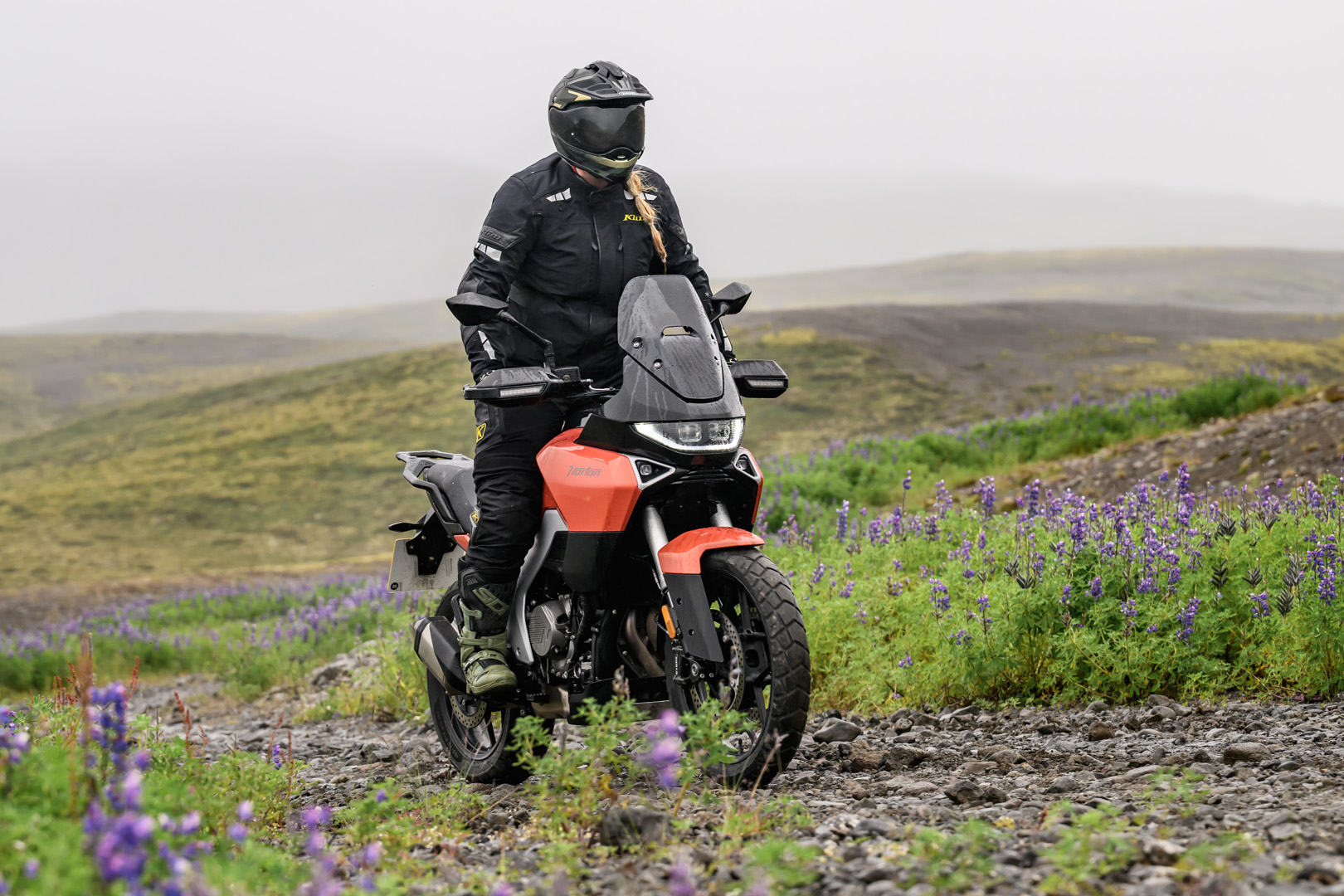
When it came time to venture off the pavement, I’ll preemptively say we didn’t ride particularly technical terrain. Our test consisted of mainly gravel roads that were fairly well packed but wet with rain. Switching to Enduro mode disables traction control and ABS at the rear wheel. ABS is still active at the front wheel, however it does allow for some minor slippage. Overall the chassis felt stable in these conditions and even felt quite controlled when stepping the rear wheel out around corners.
The biggest challenge for me was the ergonomics setup; as I mentioned previously, I just never got into a comfortable position on the bike. Others in the group, both taller and shorter than myself, didn’t have such troubles, so maybe it comes down to personal preference and body proportions.
I would like to test this bike in a more challenging offroad environment, but from what I experienced I can venture a guess: This bike will be excellent for light forest service roads but will likely struggle in more technical terrain. That said, it’s positioned as a versatile crossover type of bike, not a hardcore offroad machine.
Comparisons
Norton is taking a premium approach with the Atlas rather than competing solely on affordability. In the U.K., pricing begins at £8,240 for the standard model and £9,450 for the higher-spec Apex version, both backed by a three-year, unlimited-mileage warranty. U.S. pricing has yet to be announced, but Norton says American MSRP will be revealed ahead of the bike’s arrival in dealerships later this year.
So let’s take a look at how the numbers stack up against some of its competitors. Aprilia’s Tuareg 660 has the same engine configuration but 70cc more displacement and 11 more hp. It’s also 40 lb heavier and quite pricey at $12,499. Also with a 270-degree parallel-Twin you’ll find the Yamaha Ténéré 700, with a 100cc larger engine, an extra 40 lbs, and 4 more hp for the more affordable price of $10,999.
Triumph’s Tiger Sport 660 is an inline 3-cylinder that produces 25 more hp but also adds over 50 lbs in weight for nearly the same cost as the T7. Suzuki’s 90-degree V-Twin 650 delivers 2 more hp but adds 60lbs in weight.
There certainly are more models in the sub-700cc class that we could compare to the Atlas, but I think the point has been made. On paper, the Atlas has an impressive power-to-weight ratio, and if the price comes in at (or below) the $10,000 mark, it’s going to be an incredibly competitive option in the all-rounder middle-weight category. However, based on my own conversion calculations, it’s likely to hit the U.S. at over $12,000, in which case one must ask themselves if this is truly the best value in the class. Ultimately you make the decision based on your needs, the styling you like, and what you expect to get for the money you spend. With so many options available, there really is a bike for everyone.
Norton Legacy Carries On?
One downside to purchasing a Norton would be the current dealer network, which is fairly small. That said, it’s expanding quickly as Norton pushes into more established dealers across the country. I have a feeling it won’t be too long before we see vast coverage across the U.S.
Overall, I consider the Atlas more of a road-oriented, versatile, do-everything sort of bike. Some riders will kit them out to be more competitive off-road, but if I were buying it, I’d let it be the small crossover it was meant to be. It would be a great daily rider and an excellent smaller displacement touring machine. The electronics are impressive for its class, and the engine really is something to write home about.
The Atlas carries expectations few motorcycles ever face. It isn’t simply introducing a new model; it’s introducing a new era for one of motorcycling’s most celebrated names. That’s an enormous responsibility for any motorcycle, and it feels like the Atlas is poised to do a fine job.
Check out more new bikes in Rider’s 2027 Motorcycle Buyers Guide
2027 Norton Atlas
Base Price: Starting at £8,250 (USD unannounced)
Website: NortonMotorcycles.com
Warranty: 3 yrs., unltd. miles
Engine Type: Liquid-cooled parallel-Twin, DOHC w/270-degree crank
Displacement: 585cc
Bore x Stroke: 78 × 61.2mm
Horsepower: 69 hp @ 9,300 rpm
Torque: 42.4 lb-ft @ 7,300 rpm
Transmission: 6-speed, constant-mesh, quickshifter option
Final Drive: Chain
Wheelbase: 57.7 in.
Rake/Trail: 25.7 degrees / 4 in.
Seat Height: 33.3 in.
Wet Weight: 414 lb
Fuel Capacity: 4.07 gal.
Fuel Consumption: 54 mpg
Estimated Range: 220 miles

















Built in Hosur, India. That’s why it cheap.
I learned to ride on a 1967 Norton Atlas, a cream puff although it didn’t stop well. I moved up to a 72 Norton Commando and rode that for several years. I’ve been riding my 850 Commando now for 12 years and have had many amazing adventures on it, the Ozarks, the Texas Hill County, the Blue Ridge Mountains to name a few and I live on Hwy 1 on the Central Coast of California, get to enjoy that whenever I want. In July of 2006 my 67 Altas was featured in Rider Magazine. Thank you for your review of the modern Atlas, I like we’ll stay with the original.
I wouldn’t run out and buy one for the first year or two, but I have to say it’s a very attractive looking bike. Hopefully they do well.
Sounds like they haven’t refined it enough yet. I did not see mention of whether it was a shaft drive bike but that if equipped and the cruise control might win me over. I’ve always like the squarish styling of the Norton police bikes in the UK and this one seems vaguely reminiscent of that era.
It says chain drive.