

The motorcycle industry doesn’t need another cruiser. It doesn’t need another superbike. It needs something like this.
For 36 years, Rider has asked a decidedly difficult question: Which motorcycle best represents where the industry is going?
The Motorcycle of the Year award is reserved for the machine that does more than simply perform well. It has to represent something meaningful about the future of motorcycling. That could mean an entirely new chassis, a breakthrough in suspension design, a significant change in engine performance and technology, or sometimes a combination of familiar ideas assembled in a way that changes what riders expect from a production motorcycle.
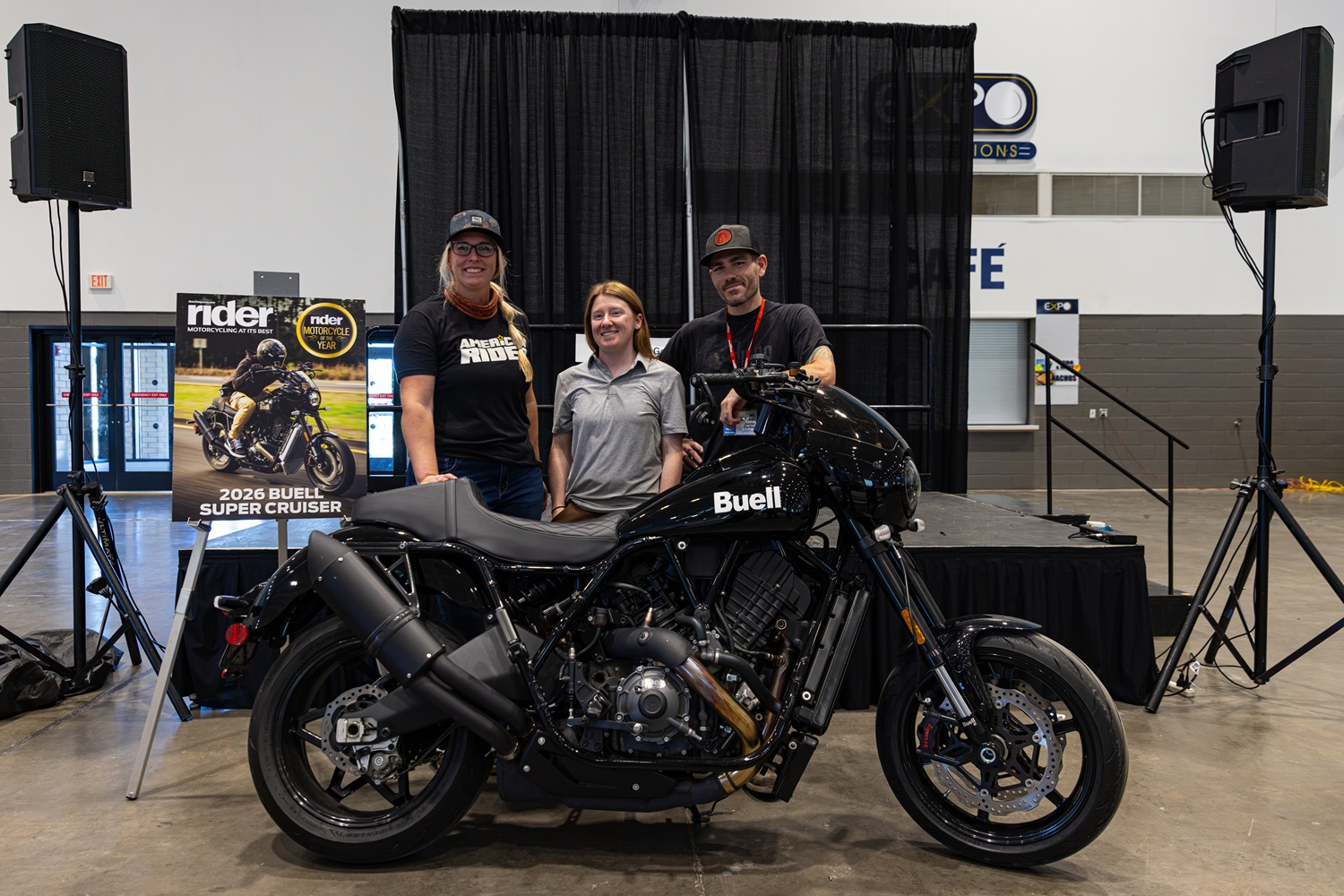
This year, we chose the Buell Super Cruiser.
At first glance, that might seem like an odd choice. After all, the Super Cruiser doesn’t introduce some never‑-before‑-seen technology. It doesn’t have an electric powertrain, radar‑-guided cruise control, or a TFT display that requires a computer science degree to operate.
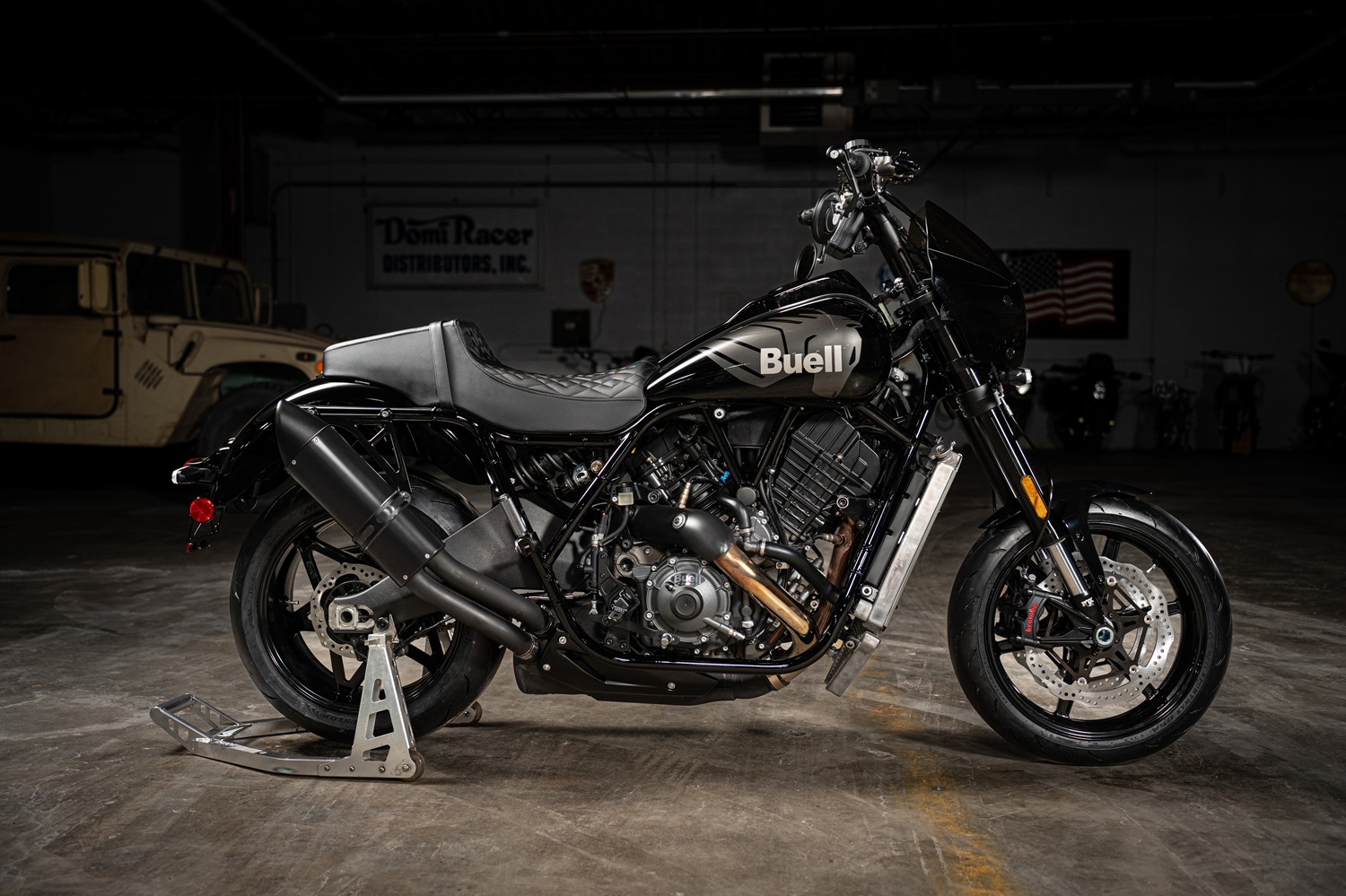
What it does have is 175 horsepower – and a cruiser chassis. Rolling on 17‑-inch wheels with serious suspension, the Super Cruiser is outfitted with Brembo brakes and a liquid‑-cooled 1,190cc V‑-Twin, and it weighs less than 500 pounds.
In other words, somebody finally asked a very good question: What happens if you take the basic proportions and attitude of an American cruiser, give it the chassis dynamics of a sportbike, and then bestow it with enough power to make the whole thing completely ridiculous? The answer is the Super Cruiser.
Familiar, Not Retro
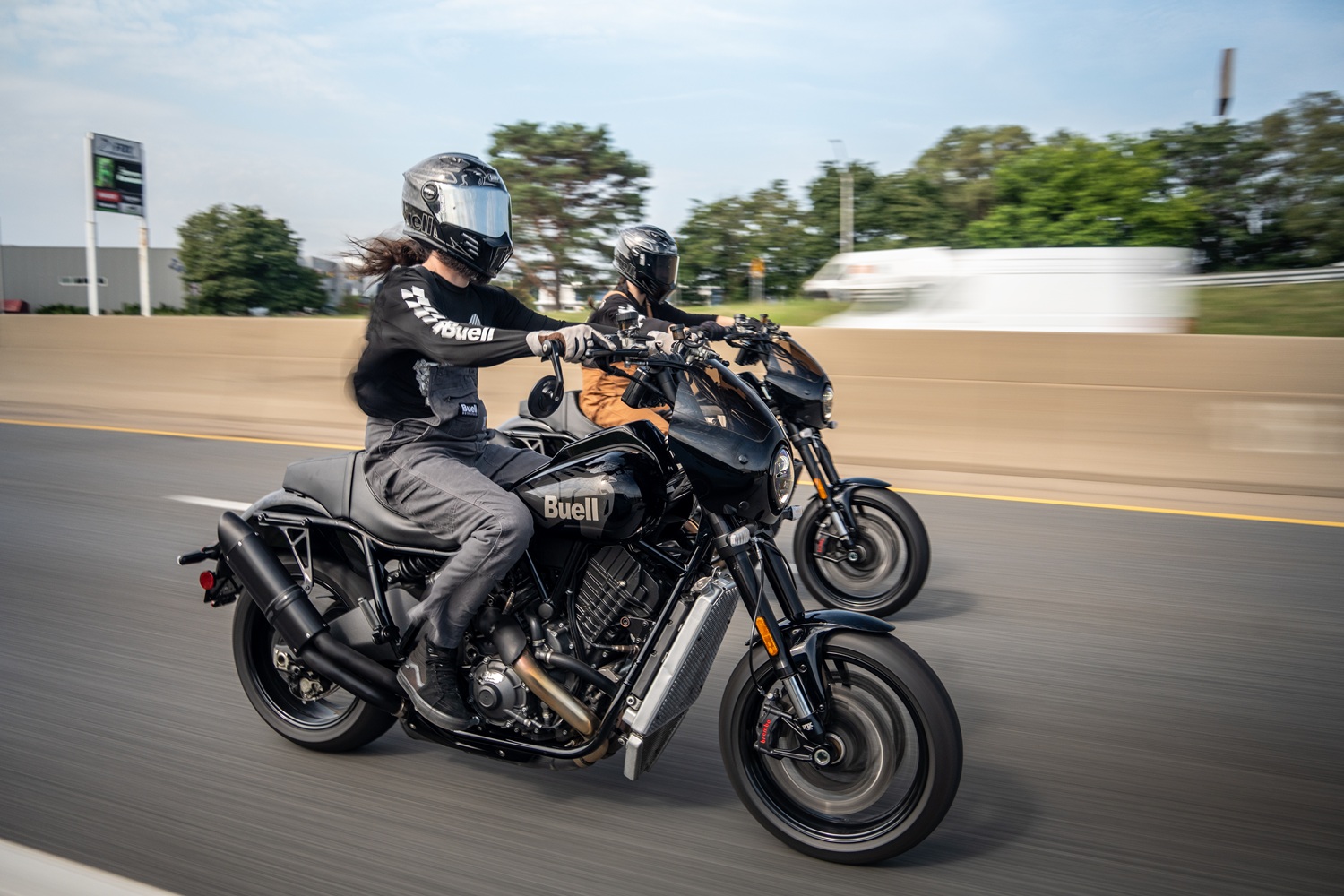
The Super Cruiser looks familiar for a reason. Its silhouette recalls one of the most beloved performance‑-oriented American motorcycles ever built: Harley‑-Davidson’s FXR. The compact chassis, triangular under-seat frame section, low‑-slung stance, and relationship between the seat, tank, and engine immediately trigger that familiarity. But this isn’t an FXR with a modern engine dropped into it.
Roland Sands Design developed an entirely new steel‑-tube chassis around the Buell powerplant, drawing inspiration from the FXR while creating something designed for modern performance. The Super Cruiser isn’t trying to recreate the past, but it is borrowing one of the better ideas from it. It’s nostalgic and modern at the same time.
The Super Cruiser’s 1,190cc, 72‑-degree V‑-Twin produces a claimed 175 horsepower and 94 lb‑-ft of torque. The engine is derived from the same family of high‑-performance Buell powerplants that power the company’s sportbikes but is now installed in a completely different kind of motorcycle.
Cruisers traditionally emphasize low‑-end torque, relaxed ergonomics, and long, stable chassis geometry. Sportbikes are built around cornering clearance, braking performance, aggressive chassis geometry, and high‑-revving engines. The Super Cruiser doesn’t choose between the two.
The production bike weighs 485 lb, according to Buell. It has a 6‑-inch‑-wide rear wheel, FOX suspension, and dual 320mm front brake rotors squeezed by 4‑-piston monoblock calipers from Brembo. Buell claims 50 degrees of lean angle. Those aren’t cruiser numbers in the traditional sense, but they are definitely performance motorcycle numbers.
The most impressive thing about the Super Cruiser isn’t any one component. It’s the way the components work together. A 175‑-hp motor would be entertaining in almost anything. But bolting a big engine into a cruiser frame doesn’t automatically make a good motorcycle. In fact, it can make a terrible one.
The trick is making the chassis capable of using the engine and the power it provides. That’s what Buell and Roland Sands Design appear to have understood. The Super Cruiser has the stance and visual language of an American cruiser, but underneath that familiar shape is a machine designed to turn, stop, and accelerate with considerably more urgency than the average cruiser.
FXR’s Logical Extreme & Buell’s Legacy
Harley’s FXR earned its reputation as a cruiser that handled better than a traditional big American motorcycle was expected to. Decades later, Buell has taken that same basic premise and asked what it would look like if there were no requirement to use traditional cruiser hardware. The result is lighter wheels, bigger brakes, modern suspension, more ground clearance, a high‑-performance liquid‑-cooled engine, and a chain final drive. It’s a motorcycle that looks like it belongs at a bike night but behaves like it has somewhere very important to be.
There’s also something significant about Buell carrying this idea forward. Erik Buell built his reputation on doing things differently. Some of his ideas became influential and some misunderstood. Buell’s motorcycles were defined by engineering decisions that challenged assumptions about what a motorcycle was supposed to look like or how its major components were supposed to work together.
Innovation in motorcycling doesn’t always mean inventing something that has never existed before. Sometimes it means refusing to accept that the pieces have to stay where everyone has always put them. The Super Cruiser follows that philosophy.
The new Buell Motorcycle Co. is carrying forward a name associated with unconventional engineering, but it isn’t just trying to recreate Erik Buell’s motorcycles. Instead, it is taking that legacy of experimentation and applying it to a segment of the market that has become remarkably predictable.
In a sense, Buell is using the Super Cruiser to create its own category of motorcycling. Call it a performance cruiser. Call it a muscle bike. Call it an FXR for the 21st century. Call it whatever you want.
The problem is that none of those descriptions quite captures it, and that’s a good thing. Motorcycles tend to get organized into categories because categories make them easy to understand. Sportbike. Cruiser. Standard. Adventure bike. Touring bike. But the most interesting motorcycles are often the ones that make those categories uncomfortable.
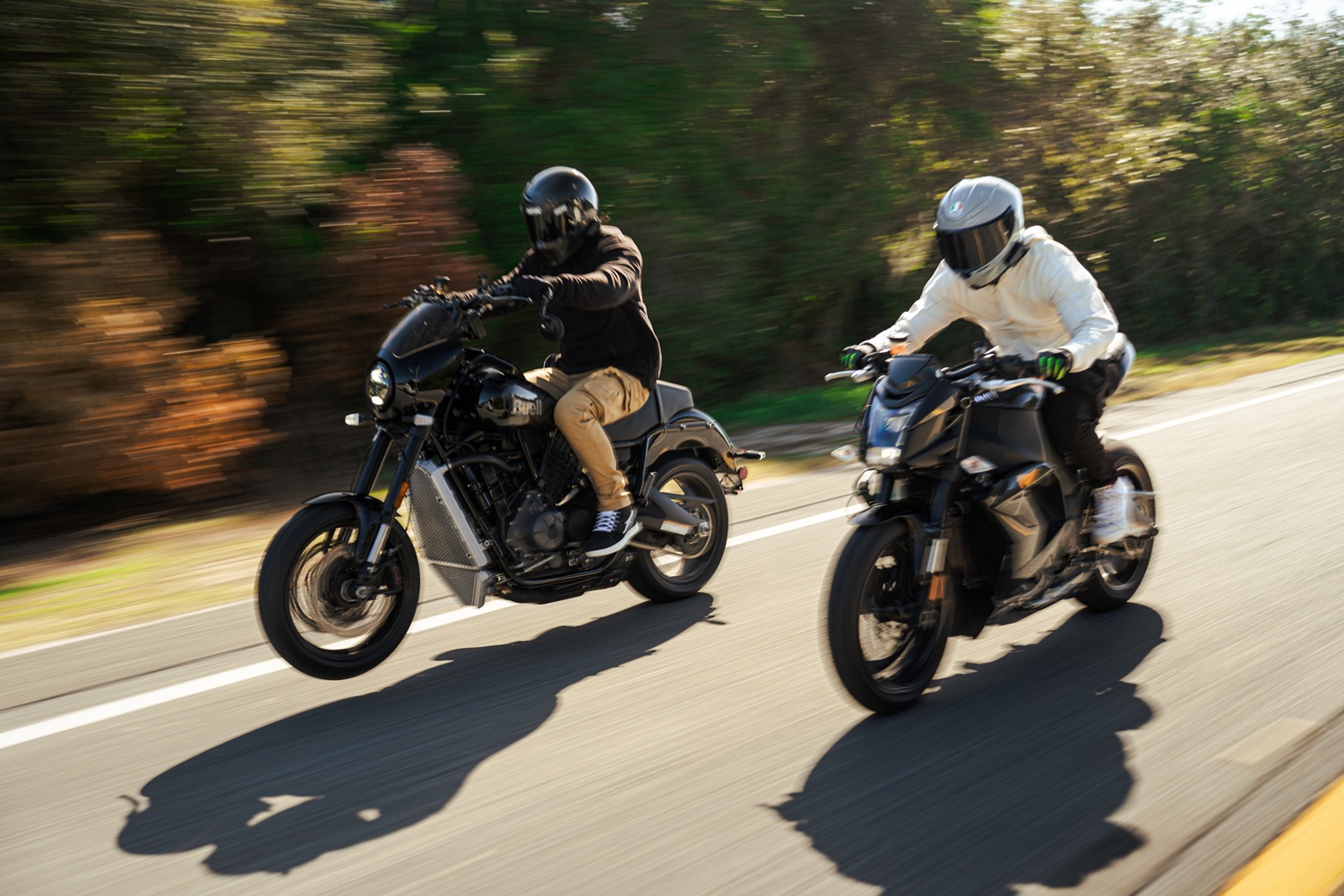
The Super Cruiser has the visual language of a cruiser without behaving like a traditional cruiser. It has superbike performance without looking like a superbike. It has modern engineering without hiding behind layers of electronic intervention or futuristic styling. It is simultaneously familiar and completely strange, which is incredibly difficult to pull off.
Why the Super Cruiser?
Ultimately, the Motorcycle of the Year isn’t about choosing the motorcycle with the biggest engine, the highest horsepower figure, or the most expensive components. It’s about recognizing the motorcycle that makes us think differently and the one that makes us feel something.
The Buell Super Cruiser does that. It takes a classic American motorcycle idea and strips away the assumptions that have accumulated around it. It asks why a cruiser can’t be light. Why it can’t corner. Why it can’t have serious brakes and suspension. Why a big V‑-Twin can’t rev to the moon. Why a motorcycle with the silhouette of an old‑-school street bruiser can’t have the performance of a modern sportbike.
And then it answers those questions with 175 horsepower and a grin‑-inducing chassis. It’s nostalgic without being retro and modern without being sterile. And, most importantly, it’s different.
Motorcycling doesn’t move forward simply because someone makes the next version of what already exists. It moves forward when someone takes a familiar idea, turns it sideways, and asks what else it could become.
For 2026, that motorcycle is the Buell Super Cruiser. That’s why it is Rider’s Motorcycle of the Year. Stay tuned for our full, detailed review of the 2026 Buell Super Cruiser, coming soon to Rider.