

Who says an adventure bike has to look like an adventure bike? Yamaha’s new RW700 blurs the line between motorcycle and scooter, and we’re completely okay with that.
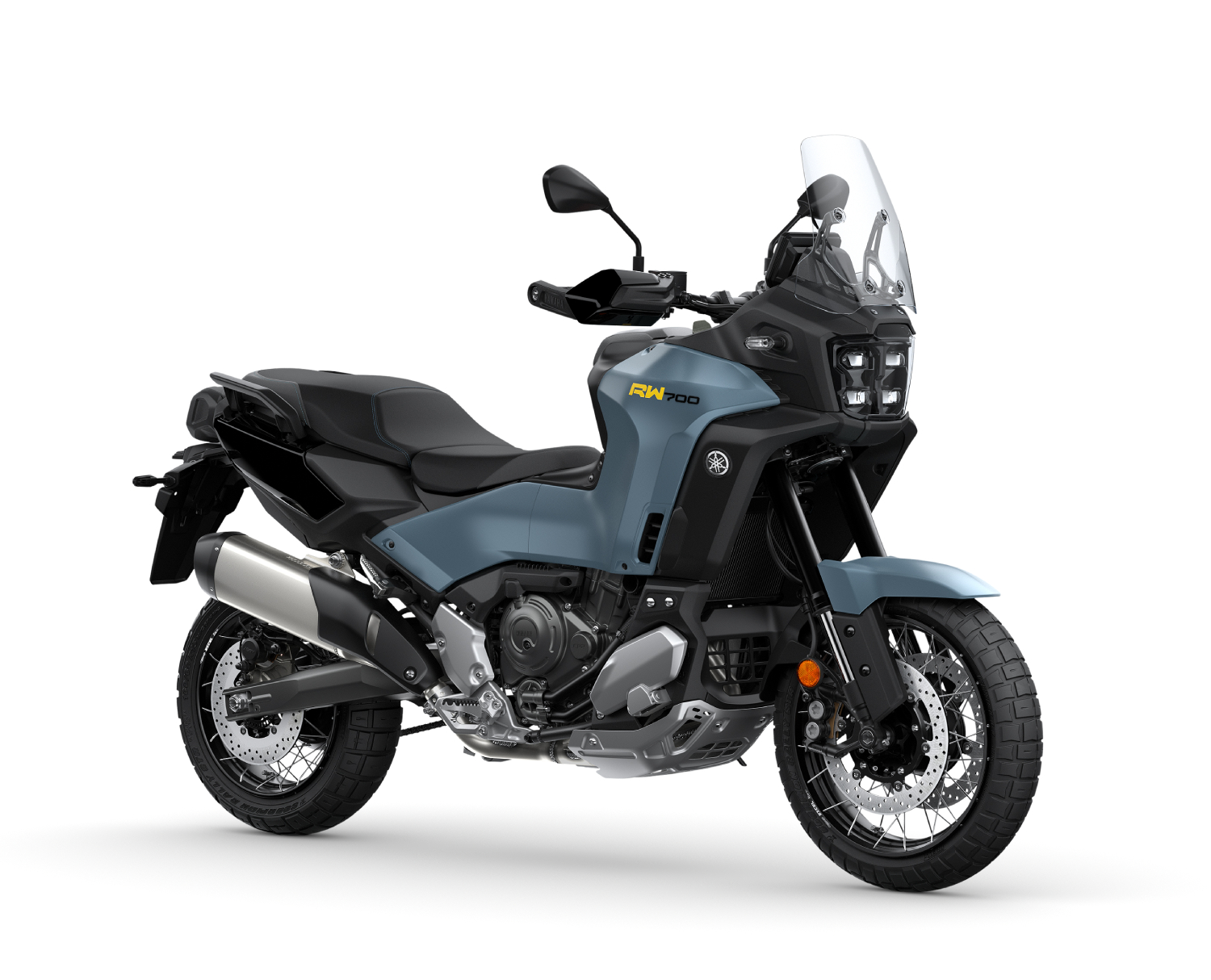
Unveiled at this year’s EICMA show in Milan, Italy, the 2027 Yamaha RW700 is an adventure scooter, according to the brand. But take a look at it and you’ll understand why we’re questioning that description. It doesn’t have the traditional step-through design you’d expect from a scooter. Instead, it has a low-slung center section, a conventional motorcycle-style seat and a chassis that looks ready to venture well beyond the pavement. It’s less step-through and more step-over.
So, is it really a scooter?
Well, it has a few undeniable scooter characteristics. There’s no clutch lever or foot-operated shifter, thanks to Yamaha’s six-speed Y-AMT automated manual transmission. Riders can let the system handle shifting automatically or select gears using handlebar-mounted controls. The rear brake is also operated by a hand lever, scooter-style, and there’s storage under the seat with room for a full-face helmet, depending on its size and shape.
A Familiar Heart in an Unfamiliar Package
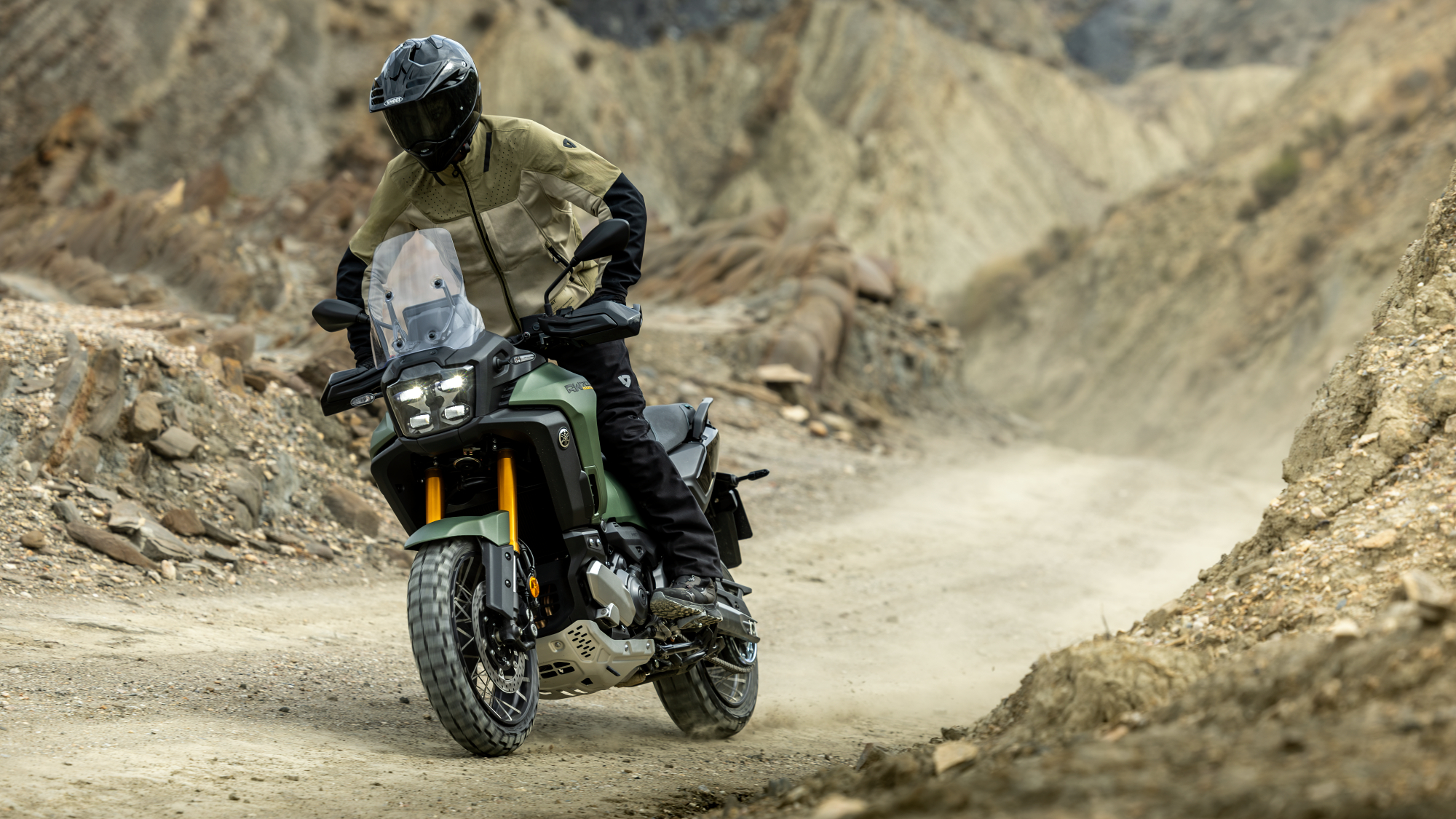
The RW700 is powered by Yamaha’s familiar 689cc CP2 parallel-twin engine, the same basic platform found in the MT-07, Ténéré 700 and several other models in the Yamaha lineup. It produces a claimed 68 horsepower and 48 lb-ft of torque. Power reaches the rear wheel through a conventional chain final drive, not the belt-and-CVT arrangement found on most scooters.
The chassis is equally unconventional. A steel backbone frame is paired with a 41mm inverted fork, along with a rear monoshock and wire-spoke wheels wearing Pirelli Scorpion Rally STR tires. Ground clearance is 6.7 inches and suspension travel measures more than 6 inches at both ends. There are adjustable footpegs for standing on rough terrain, along with foldable footboards for a more relaxed, feet-forward riding position. In other words, Yamaha wants riders to be able to commute to work, cruise down the highway, and stand up on gravel roads without swapping cycles.
There’s even a GRAVEL riding mode, complete with specialized transmission programming, adjustable rider aids and the ability to disable rear ABS.
But Wait, There’s More!
The higher-spec RW700 Explore adds adjustable front suspension, heated grips, a heated seat, and a centerstand. Both versions get a comprehensive electronics package, including a six-axis IMU, cornering ABS, traction control, slide control, cruise control and a 5-inch TFT display.
At a claimed 487 lb ready to ride, it’s certainly not a lightweight scooter. But it also isn’t pretending to be a little city runabout.
Finding Its Place
And that’s what makes the RW700 so intriguing. The adventure motorcycle category has spent years evolving toward bigger engines, more technology, and increasingly elaborate hardware. Meanwhile, scooters have largely been relegated to urban transportation, even though models like Honda’s X-ADV have demonstrated there’s room for something in between.
This machine doesn’t seem particularly concerned with fitting into an existing category. Maybe it’s a scooter. Maybe it’s an adventure motorcycle with a few scooter tendencies. Maybe the distinction doesn’t matter.
What does matter is whether it’s fun to ride, useful in the real world, and capable of taking the long way home when the pavement ends. On paper, the RW700 checks a lot of those boxes.
Yamaha has also introduced the smaller RW350, suggesting this isn’t just a one-off experiment but the beginning of a whole new adventure-scooter family.
Now for the part we’re really interested in… Will Yamaha bring the RW700 to the United States? Pricing and U.S. availability have yet to be announced.
We hope the answer is yes. Because if there’s one thing motorcycling could use, it’s a few more machines that make us rethink what a motorcycle can be. And we’re perfectly happy to call this one whatever Yamaha wants, as long as we get a chance to ride it.